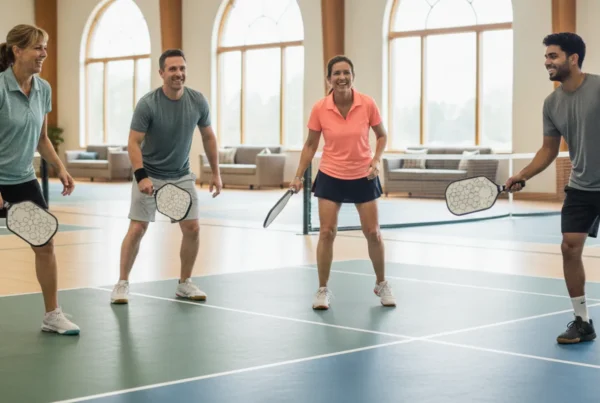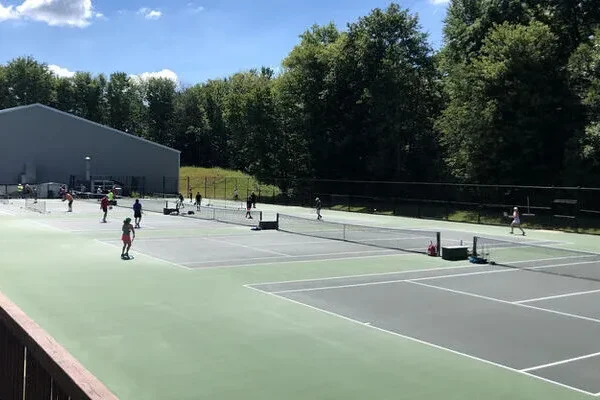

Choosing a racquet sport gets easier when you compare the experience, not just the equipment. Tennis offers a larger court, a familiar felt-covered ball, and a wider range of movement. Pickleball brings a smaller court, a solid paddle, an underhand serve, and quick opportunities to build a rally. Both can be social, active, and rewarding for beginners and experienced players.
Schedule a Tour to compare your options at The Wembley Club
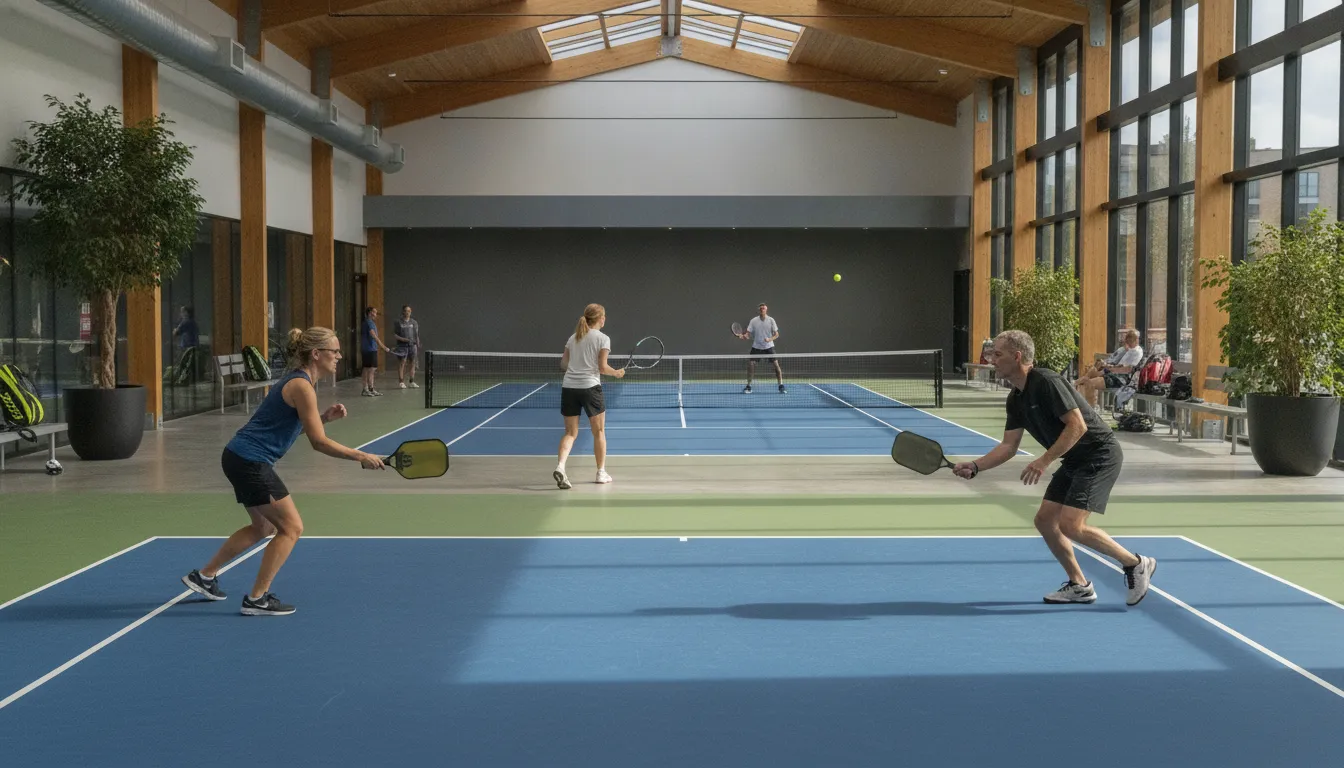
Pickleball vs tennis comes down to what you enjoy most. Pickleball may feel approachable and naturally social at first, while tennis can offer more court to cover and a broader technical challenge. Neither is the universal winner. Your best choice depends on your goals, preferred pace, fitness interests, and whether you like casual doubles, focused practice, or competitive play.
At The Wembley Club, you do not have to make that decision in the abstract. A welcoming private fitness and racquet sports club can give you room to explore both sports, meet players, and find the setting that keeps you coming back. Start by looking at how the two games differ at their core.
What Is the Core Difference Between Pickleball and Tennis?
Answer in brief: Pickleball is played on a smaller court with a solid paddle and a perforated plastic ball. Tennis uses a larger court, a strung racquet, and a felt-covered rubber ball. The result is a different movement pattern and rally feel, even though both sports involve serving, returning, and finding space around a net.
The court scale is the first difference you notice. A regulation pickleball court measures 20 feet wide by 44 feet long, according to USA Pickleball. A standard tennis court is 78 feet long and 27 feet wide for singles, according to the International Tennis Federation. Tennis therefore gives players more ground to cover and more room for shots that travel deep or wide. Pickleball keeps players closer to the action, where positioning and quick reactions become especially important.
The equipment changes the contact and sound of the game, too. Pickleball uses a solid paddle and a perforated plastic ball. Tennis uses a rubber ball with a felt covering and a strung racquet. The pickleball ball is designed with holes across its surface, while a tennis ball is built for the familiar bounce and pace associated with a larger court. These differences help create two distinct experiences: tennis often feels more expansive, while pickleball feels more compact and immediate.
The net and serve add another layer. Tennis nets are higher than pickleball nets at both the posts and the center. Pickleball serves are underhand, and the sport includes a non-volley zone, commonly called the kitchen. That zone shapes where players can volley and encourages careful placement near the net. In tennis, the serve is an overhead stroke and can begin a point with a more forceful, longer-reaching shot.
That combination affects rally rhythm. Tennis rallies may involve larger swings, longer runs, and more pronounced changes between the baseline and net. Pickleball rallies often reward compact swings, soft touch, and patience in a tighter space. Neither sport is simply the easier version of the other. They ask you to read the ball, anticipate your opponent, and choose when to attack or reset. If you want to compare the experience in person, learn more about pickleball at The Wembley Club alongside its tennis programming.
Court Size, Equipment, and Scoring: Side-by-Side Breakdown
Answer capsule: Pickleball uses a smaller court, a lower net, a solid paddle, and a perforated plastic ball. Tennis covers more space, uses a felt-covered rubber ball and racquet, and follows a more layered scoring system. Both sports work for singles or doubles, but the court and equipment differences create a noticeably different feel.
| Feature | Pickleball | Tennis |
|---|---|---|
| Court size | 20 feet wide by 44 feet long for singles or doubles. The non-volley zone extends 7 feet from the net on each side. Court specifications | 78 feet long; 27 feet wide for singles and 36 feet wide for doubles. ITF court rules |
| Net | 36 inches high at the sidelines and 34 inches at the center. | 36 inches high at the center and 42 inches at the posts, making it higher at the ends. Net comparison |
| Ball | A plastic ball with 26 to 40 holes. | A rubber ball with a felt covering. |
| Paddle or racquet | A solid paddle. | A tennis racquet. |
| Serve | Underhand, with the non-volley zone shaping where players can attack close to the net. | Uses a different service motion and serves into a designated service box. |
| Scoring | Games are generally played to 11 points, and a player or team must win by two. | Points within a game are called 15, 30, and 40. At 40-40, called deuce, a player must win by two points. |
| Singles and doubles | Both formats are available, with doubles offering a compact, cooperative court experience. | Both formats are available, with doubles using the wider court. |
For beginners, the practical difference is not just the size of the playing area. A smaller court brings players closer together, while the kitchen, or non-volley zone, limits volleys directly beside the net. That encourages careful placement and patient exchanges instead of treating every shot as a race to hit hard.
- Choose pickleball equipment if you prefer a compact solid paddle and a lighter-looking plastic ball with holes.
- Choose tennis equipment if you enjoy the reach, swing, and ball response of a racquet sport played across a larger court.
- Try both formats if you want to compare the teamwork of doubles with the more open space and movement of singles.
There is no universally better setup. The right choice depends on whether you are drawn to close-quarters strategy and quick access to doubles play, or longer court coverage and traditional tennis rallies.
Which Sport Is Easier for Beginners?
Short answer: Neither sport is universally easier. Pickleball may feel more approachable at the start because its underhand serve, smaller court, and simple early rallies can help new players get involved quickly. Tennis may feel more natural for someone who enjoys covering space, learning a full swing, or already has racquet-sport experience. Your goals, coordination, comfort, and access to coaching matter as much as the sport itself.
USA Pickleball describes the game as easy to learn but challenging to master, which is a useful way to think about the learning curve. A first session often involves learning how to hold the paddle, make consistent contact, serve underhand, and keep the ball in play. Those early successes can make the game feel inviting. Pickleball also uses a two-bounce rule, and its kitchen, or non-volley zone, encourages players to focus on placement and control instead of rushing every point. The result can be a surprisingly strategic rally even when the basic strokes feel manageable. USA Pickleball explains the sport’s fundamentals, including the serve and kitchen zone.
Tennis usually asks beginners to coordinate more space and a broader set of movement patterns. You may be learning the serve, groundstrokes, footwork, and court positioning at the same time. That can feel demanding during the first few sessions, but it also gives you clear skills to build. Practical guidance: start with a coach or beginner-friendly group that breaks the game into small pieces. Learning a dependable rally before worrying about pace or advanced spin can make tennis feel far less intimidating. Explore tennis at The Wembley Club to see how the sport fits into a welcoming racquet-sports setting.
Experience transfers, too. A tennis player may recognize concepts such as ready position, timing, tracking the ball, and changing direction when trying pickleball. Those skills can help, but they do not remove the need to learn pickleball-specific touch, serve rules, and kitchen strategy. Likewise, a pickleball player may bring useful hand-eye coordination and point awareness to tennis while still needing time to develop a larger swing and more movement around the court.
Whichever sport you choose, coaching and repetition usually matter more than finding a supposed shortcut. Begin with a few fundamentals, practice them consistently, and play with people who keep the experience encouraging. If you are still deciding, try both. The better choice is the one that makes you want to come back for another session.
Which Is Better for Fitness and Calorie Burn?
Answer capsule: Neither pickleball nor tennis is a universal winner for fitness or calorie burn. Tennis often creates more court to cover, especially in singles, while pickleball can deliver frequent movement, quick reactions, and sustained rallies in a smaller space. Your format, pace, skill level, and willingness to keep playing will shape the workout more than the sport’s name.
When comparing pickleball vs tennis, start with the amount and type of movement you enjoy. A standard tennis court is 78 feet long and 27 feet wide for singles, with a 36-foot width for doubles. That larger playing area can invite longer runs, wider changes of direction, and more recovery between shots. Singles tennis may feel especially demanding because one player covers the court alone. Doubles reduces each player’s territory, but communication and positioning still keep you active.
Pickleball uses a 20-by-44-foot court, and players can compete in singles or doubles. Doubles is common and often creates a steady pattern of short sprints, lateral steps, split-second adjustments, and repeated swings. The smaller court does not make the game automatically easy. The non-volley zone sits 7 feet from the net on each side, and the kitchen and lower net encourage players to manage distance, placement, and timing. A long rally can be physically engaging even when it does not involve a full-court chase.
Session format matters just as much as court dimensions. A relaxed doubles game with frequent conversation will create a different workout from a fast, competitive singles match. Skill level changes the picture too. Beginners may spend more time learning positioning and recovering for the next point. Experienced players may extend rallies, attack openings, or move with greater efficiency. Pickleball can be casual or competitive, and both sports can be played at different intensities.
Research should also be read with appropriate caution. A 2024 scoping review examined the broad evidence on pickleball and health, but a review of available research does not establish one guaranteed fitness outcome for every player. Read the scoping review on pickleball and health for context. More generally, the CDC’s physical activity guidelines support regular activity, without requiring everyone to choose the same sport.
The practical answer is simple: choose the game that makes you want to return. Trying both formats can reveal whether you prefer the longer movement patterns of tennis, the quick exchanges of pickleball, or a mix of each.
Can You Play Both? How The Wembley Club Lets You Cross-Train
Answer: Yes. Playing both sports can give you variety without separating your social life between two facilities. Tennis and pickleball use different equipment, court layouts, and rhythms, but both can be played in singles or doubles. At The Wembley Club, relevant membership options include access to both sports, creating a practical home base for players who enjoy changing things up.
Cross-training starts with recognizing that you do not have to choose one identity. A tennis player may appreciate pickleball’s approachable rallies and doubles format, while a pickleball player may enjoy the larger court movement and longer point construction of tennis. The right mix can depend on your schedule, energy, and the people you want to play with that day.
One club, more ways to play
The Wembley Club brings tennis, pickleball, paddle, fitness, swimming, and family programming together under one membership model. That combination makes it easier to build an active routine around your interests rather than forcing every visit to look the same. You might play a tennis match, join a pickleball game, or spend time in another club program while staying connected to the same community.
At the Chagrin Falls facility, the court inventory includes 8 indoor tennis courts, 12 pickleball courts, and 4 paddle courts. That range supports different kinds of play, from a focused session with a regular partner to a more social doubles game. The club has operated in Chagrin Falls for approximately 30 years, and its stated approach combines quality facilities with community, fun, and friendliness.
Find your rhythm across both sports
Pickleball offers casual and competitive play, so it can be a comfortable way to meet players at different experience levels. Tennis can provide a different challenge and a fresh reason to keep developing your movement, timing, and shot selection. You do not need to decide which sport is permanently better. Try each one, notice which setting makes you want to return, and let your routine evolve.
Explore tennis at The Wembley Club and pickleball at The Wembley Club to see how both sports fit into the club experience. For players who value variety and community, cross-training can make racquet sports feel less like a weekly obligation and more like the part of the week you look forward to.
Schedule a Tour to find your best way to start playing
How to Choose Between Pickleball and Tennis
There is no universal winner in the pickleball vs tennis conversation. The better choice depends on the kind of movement, equipment, competition, and social experience you want from your time on court. Use this quick guide to narrow it down, then give yourself permission to enjoy both.
- Choose your preferred pace and court movement. Tennis gives you more court to cover, with longer baseline movement and more room to build points through depth and speed. Pickleball keeps the court more compact, but the kitchen and lower net create a different challenge built around placement, touch, and patient exchanges. If you enjoy covering ground and hitting with a larger swing, start with tennis at The Wembley Club. If you prefer close-range decision-making and controlled shots, explore pickleball at The Wembley Club.
- Think about the equipment feel. Tennis uses a racquet and a felt-covered rubber ball. Pickleball uses a solid paddle and a perforated plastic ball, with an underhand serve. Consider which setup feels more natural in your hand and which kind of contact sounds enjoyable to practice. Neither choice requires you to arrive as an expert.
- Decide whether singles or doubles sounds most like you. Both sports can be played in singles or doubles. Singles can give you more individual court responsibility, while doubles adds shared coverage, communication, and quick teamwork. If meeting people and playing in a group is part of your goal, doubles may be the best first format. You can always switch later.
- Match the strategy to your personality. Pickleball includes a non-volley zone, often called the kitchen, and a two-bounce rule that rewards placement and control. Tennis offers its own mix of serve patterns, court positioning, and point construction. Choose the rules and problem-solving style that make you curious rather than intimidated.
- Prioritize the social experience you want. Some players want focused competition. Others want a welcoming routine, new partners, and a reason to spend time with family or friends. The Wembley Club brings tennis, pickleball, paddle, fitness, and family programming together in a community-oriented setting, so you do not have to make the decision permanent.
Schedule a Tour
to see which court environment feels like a good fit.
First-visit checklist
- Wear comfortable athletic clothing and court-ready shoes.
- Ask which format is best for a first session, singles or doubles.
- Try a few basic shots and notice which movement feels engaging.
- Ask how beginners can find instruction, playing partners, or social sessions.
- Leave with a simple next step, whether that is another visit, a tennis session, or a pickleball game.
The right answer is the one that makes you want to come back. For many players, that answer eventually includes both.
Frequently Asked Questions
Which sport is easier to learn, pickleball or tennis?
Pickleball is often the more approachable starting point because its underhand serve, smaller court, and slower plastic ball can make early rallies feel manageable. USA Pickleball describes it as easy to learn but challenging to master. Tennis may require more time to develop a consistent serve and cover a larger court, but racquet experience transfers well between the two sports.
Is pickleball or tennis better for a workout?
Neither sport is automatically better for every player. Tennis generally asks you to cover more court, while pickleball emphasizes quick reactions, positioning, and repeated movement in a smaller space. Your workout depends on whether you play singles or doubles, how intensely you move, and how long you stay on court. Choose the sport that makes you want to play consistently.
Can tennis players switch to pickleball easily?
Yes. Tennis players already understand basic concepts such as serving, returning, rallying, and placing a ball away from an opponent. Pickleball still has its own skills and rules, including the non-volley zone and two-bounce rule, so avoid assuming the games are identical. Start with control and placement before relying on a full tennis swing.
How can I try both sports at The Wembley Club?
Begin by exploring the club’s tennis and pickleball programs, then:
Schedule a Tour
to discuss the best way to get started. The Wembley Club brings racquet sports and community together, so you can compare the feel of each game and choose what fits your goals.
Schedule a Tour at The Wembley Club
Trying to choose between pickleball, tennis, or a little of both? A tour can help you picture how each option fits your interests and find a comfortable way to get started in a welcoming racquet sports community.
Schedule a Tour
to talk with The Wembley Club about your next step.