
If you are looking for a Chagrin Falls pickleball club, you may be weighing public drop-in play against a membership that gives you more ways to play and connect. Private access can mean a familiar home base, a range of play formats, and a community around the sport—but the details depend on how each club runs its courts. At The Wembley Club in Chagrin Falls, pickleball is part of a broader racquet sports community. This guide explains what to compare and what to ask before you decide. For an overview of the club’s racquet sports, start with racquet sports at The Wembley Club.
Schedule a tour and ask about pickleball
What Does Membership at a Pickleball Club Actually Include?
A pickleball club membership is more than permission to step onto a court. It can create a reliable place to play, make it easier to find partners, and give you ways to move between casual games and more organized play. But “membership” does not automatically mean unlimited court time, a guaranteed reservation, a particular league, or a private court whenever you want one. Those policies vary. Ask how the club’s actual schedule and access work.
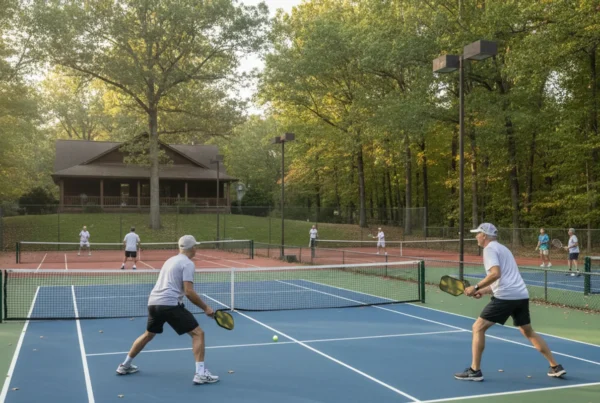
At The Wembley Club in Chagrin Falls, the pickleball program has 12 courts, and the club reports an average open-play group of 30 to 40 players. That gives players an established setting in which to meet others and get games in. It does not, by itself, tell you whether a particular time slot is open, how busy it will be, or whether you can reserve a court. Confirm those details directly before you make plans.
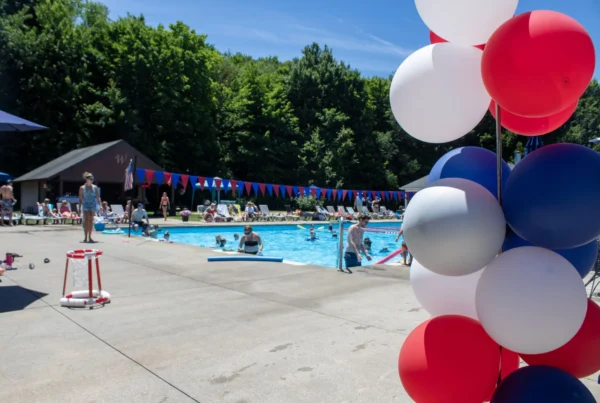
It also helps to understand how pickleball fits into the whole club. Wembley is a private fitness and racquet sports club, with tennis, paddle, swimming, and group fitness among its offerings. The Chagrin Falls location has a pool; amenities vary by location, so do not assume another club location has the same facilities. Explore the pickleball program and the club’s broader tennis offering to see how the sports sit alongside one another.
Membership access is not the same as a reservation guarantee
When you compare clubs, separate the right to participate from the right to reserve a specific court at a specific time. Ask whether play is primarily organized as open play, whether reservations are available, how far ahead they can be made, and whether court time is shared with other racquet sports. A clear answer helps you set realistic expectations.
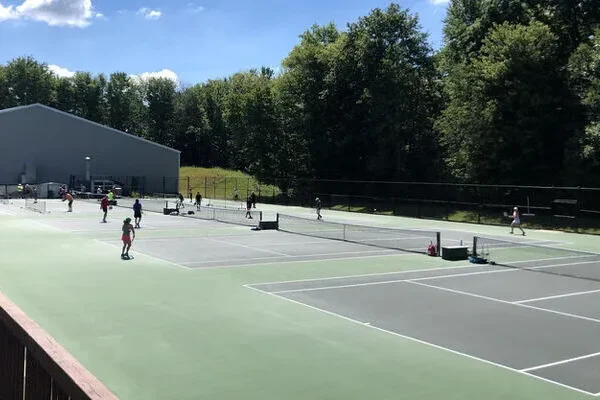
At Chagrin Falls, court formats are shared rather than dedicated exclusively to pickleball. That is an important point for planning: the club’s court setup differs from the dedicated pickleball courts planned for the South Fayette, Pennsylvania, facility. If you are evaluating the Chagrin Falls location, ask how shared-court scheduling affects the times and formats that matter most to you.
Private Club Pickleball vs. Public Open Play: What Changes?
Public open play can be a convenient, low-commitment way to try pickleball. You may be able to arrive, join a queue, and rotate into games without becoming a member. It can work well when your schedule is flexible and you enjoy meeting whoever is there. The tradeoff is that public court availability and the experience can vary by venue, time, and demand.
A private club offers a different proposition: membership connects you to the club’s own facilities and community. Depending on its policies, there may be options beyond casual drop-in play, such as scheduled open play, organized matches, leagues, lessons, or social events. These are questions to investigate—not benefits to assume. Ask which formats are currently offered at the Chagrin Falls club, how to join them, and whether they are included with membership or have separate conditions.
Here is a practical comparison. It describes common differences to ask about, not a promise about the rules at any particular public facility or club.
| What to compare | Public drop-in play | Private club membership |
|---|---|---|
| How you get on court | Often arrive during posted public hours and follow the venue’s rotation or queue. | Follow the club’s member access rules; ask whether open play, reservations, or both are available. |
| Predictability | Can depend on public hours, weather for outdoor courts, and how many players arrive. | Can provide a regular club setting, but exact availability still depends on scheduling and court policies. |
| Ways to play | Usually centered on the drop-in format offered at that facility. | May include additional formats or programs; confirm which ones are active and how they work. |
| Finding partners | Meet players when you visit, with the group changing from session to session. | Repeated visits can help you get to know fellow members; ask whether the club facilitates introductions or group play. |
| Cost and commitment | May involve a court fee or no charge, depending on the public venue. | Membership terms and included access vary. Ask for the current terms for your household and location. |
For a player who wants one occasional game, public access may be enough. For someone who wants regular play and a place to build connections, club membership may be worth exploring. The right comparison is not simply “private versus public.” It is whether the schedule, access rules, travel distance, and overall club experience fit your real routine.
How Can You Find Consistent Court Time?
Consistency is a major reason players consider a club, but it comes from understanding the schedule—not just seeing a court count. Before joining, describe a normal week: the days you can play, the times you prefer, whether you play singles or doubles, and how often you want to come. Then ask the club to explain which of those options are realistic.
Useful questions include:
- When is pickleball play currently scheduled at the Chagrin Falls location?
- Is the main format open play, reserved court time, organized sessions, or a combination?
- How does the club manage rotations and wait times when a session is busy?
- How are shared courts scheduled between racquet sports?
- Can members see the current schedule in advance, and how are changes communicated?
- Are guests allowed, and are there limits or separate rules for bringing them?
These questions matter because a club with many courts can still have popular time slots. Conversely, a shared-court arrangement may offer useful play windows when you understand the schedule. The answer you need is specific: not “there are courts,” but “here is how you can typically access play at the times you can come.”
It helps to ask about both a normal week and a busy one. Find out whether the schedule changes seasonally, whether holidays affect play, and how the club lets members know about updates. If your availability is narrow—say, only early mornings or one evening a week—make that clear. A general description of the program may sound promising, but your decision should be based on the times you can realistically attend.
You can also ask what happens when you arrive without a partner. Some players are comfortable finding a game on the spot; others prefer to arrange a match in advance. Ask how solo players join a session, whether there is a check-in or rotation process, and what a typical wait might look like during busy periods. The club can explain its current system; these details should not be guessed from the number of courts alone.
For a first visit, try to see the club during a time that resembles your usual availability. Notice whether players know where to go, how games are organized, and whether the atmosphere feels comfortable for your level. If you are new, ask whether there is a welcoming way to join in. If you already play regularly, ask how the club accommodates players seeking more competitive games.
Leagues, Round Robins, and Coaching: What Should You Ask?
Open play is a good way to meet different players and get games in. Some players also want a more predictable opponent group or a format with a little structure. Leagues, ladders, round robins, clinics, and instruction can all serve different goals—but a club’s current offerings can change. Do not assume that every format is running simply because it is common at other clubs.
Ask what is currently available for your level and what the commitment looks like. For a league, find out whether it has a set season, how players are grouped, and what happens if you miss a session. For a round robin, ask how players rotate and whether you need to register. For coaching, ask whether instruction is offered, whether it is private or group-based, and how the instructor places players by experience. Also confirm any costs and scheduling details directly; lesson pricing is not published here.
The Wembley Club has a growing pickleball program and a racquet sports environment that also includes tennis and paddle. That makes it sensible to ask staff about current pickleball play options and how to find a group that matches your goals. It would not be accurate to promise a particular league, lesson, or event schedule without confirming what is running now. You can also browse the club’s racquet sport professionals and ask which instruction options are current and appropriate for you.
If you want to learn the rules or refresh a detail before playing, consult USA Pickleball, the sport’s national governing body. Knowing the basics can make it easier to follow a new format and feel at home on court.
What Does Pickleball Community Look Like at a Club?
Community is built through repeated, low-pressure interactions: recognizing familiar faces, finding a partner for another game, and having a reason to come back. A club can make those connections easier by bringing players together around regular court time, but the social experience depends on the people and programs—not just the building.
When you visit, notice how new players are welcomed. Is it clear where to check in? Can someone explain the rotation? Do players mix across skill levels, or are there ways to find a more suitable game? If you are coming with a partner, ask whether you can join as a pair. If you are coming alone, ask how individual players enter open play. These details can tell you more about day-to-day fit than a list of amenities.
A racquet sports club can also appeal to households with different interests. One person may be keen on pickleball, while another prefers tennis or fitness classes. The Wembley Club offers multiple activities at its Chagrin Falls location, so a visit can help you judge whether the wider setting suits your household. Learn more about fitness and classes or, for families, family amenities. Check the current membership terms and included access rather than assuming that every activity is part of every membership.
How Do You Decide Whether a Chagrin Falls Pickleball Club Fits?
Use a short checklist to turn a tour or conversation into a useful comparison:
- Match the schedule to your life. Identify two or three realistic times you could play and ask what is available then.
- Understand the court arrangement. Confirm whether play uses shared or dedicated courts and how the schedule is set.
- Ask about the format. Find out how open play works and whether reservations, leagues, round robins, or instruction are currently offered.
- Check the fit for your experience. Ask how beginners, returning players, and competitive players find appropriate games.
- Review the terms directly. Get current membership details for the right location and household. The Wembley Club states that it has no initiation fees and no yearly commitment; memberships are month-to-month with 30-day cancellation notice. Do not assume identical pricing between locations.
- Consider the whole club. Decide whether the other activities and community matter to you, not only the pickleball courts.
This process helps you compare what you will actually use with what a club offers. If the answers are clear and the schedule fits, membership may give you a practical home base for more regular play. If you mostly want a spontaneous game now and then, public drop-in play may remain the simplest choice.
How to Explore Pickleball at The Wembley Club
The Wembley Club is a private fitness and racquet sports club in Chagrin Falls, Ohio. Its pickleball offering includes 12 courts and open play that averages 30 to 40 players. Chagrin Falls uses shared courts, so ask how current scheduling affects the options you care about. Program details and availability are best confirmed with the club, especially if you are looking for a particular league, lesson, or reservation window.
A tour gives you a chance to see the facility, talk through access, and consider whether the community suits your style. Bring your questions about typical play times, how to join open play, the court schedule, and current membership terms. If you want to compare other racquet activities while you are there, ask about paddle as well as pickleball.
Contact The Wembley Club to plan a visit
Frequently Asked Questions About Pickleball Clubs
Does private club membership guarantee a court reservation?
Not necessarily. Court access and reservations depend on each club’s rules. Ask whether members can reserve courts, how far ahead, and how shared-court scheduling works at the Chagrin Falls location.
Is The Wembley Club’s Chagrin Falls pickleball setup dedicated to pickleball?
No. The Chagrin Falls location has shared courts. The planned South Fayette facility has a different court setup, so confirm location-specific details when comparing them.
Can I join open play if I am new to pickleball?
Ask the club how current open play is organized and whether the format fits beginners. You can also ask staff about appropriate ways to start and what instruction is currently available.
Are pickleball leagues or lessons included with membership?
Programs and membership terms can vary and may change. Contact the club to confirm whether a particular league, lesson, or other program is currently offered and whether additional conditions apply.
How do I find out whether membership is right for me?
Schedule a visit, explain when and how you want to play, and ask for current access and membership details. A clear picture of the schedule and terms will help you decide whether the club fits your routine.
The best pickleball setting is the one that makes it easy for you to return, find the kind of games you enjoy, and feel welcome as part of the community. Compare the details and choose what fits.