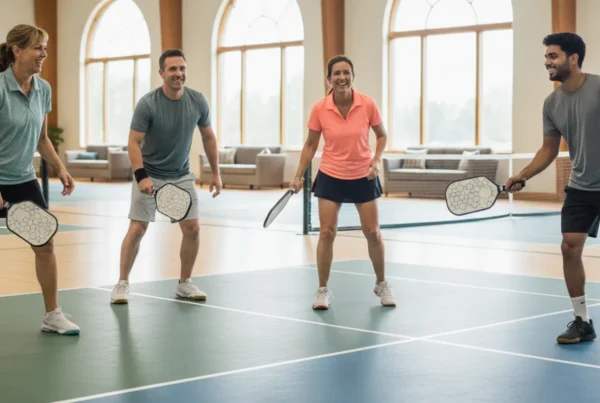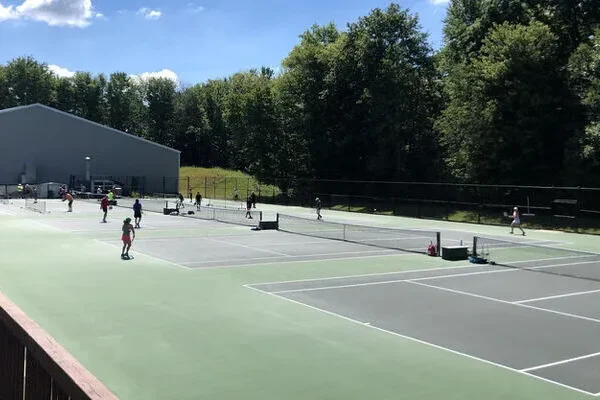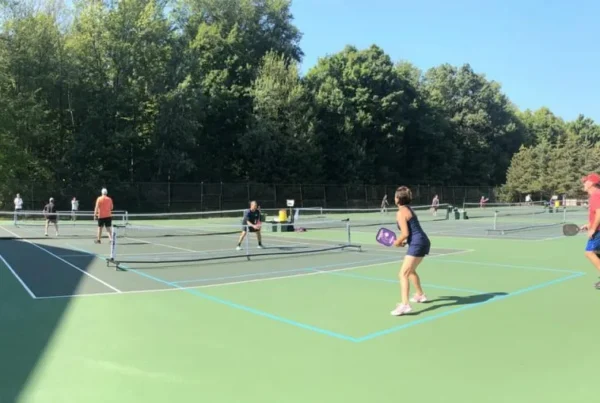

Pickleball can be a surprisingly complete way to move, especially when you are looking for exercise that feels social instead of solitary. The quick rallies, short sprints, reaching, and changes of direction can raise your heart rate, while playing with others may make it easier to stay consistent.
Schedule a Tour at The Wembley Club to find a welcoming way to start playing pickleball.
So, is pickleball good exercise? Yes, for many newcomers it can support cardiovascular fitness, movement, calorie expenditure, coordination, and social connection. The workout varies with your pace, rest periods, and whether you play singles or doubles. So think of it as enjoyable activity that can build gradually rather than a guaranteed result. A scoping review found promising benefits, while noting that pickleball research is still developing: review the evidence.
At The Wembley Club in Chagrin Falls, you can explore Chagrin Falls racquet sports in a welcoming setting. Before choosing the right pace for your first game, it helps to understand what your body is actually doing on the court.
Why Is Pickleball Good Exercise for Many Players?
Pickleball combines short bursts of movement with brief pauses, so the workout can feel more like an active game than a steady gym routine. Players repeatedly move forward and backward, change direction, reach, rotate, and shuffle laterally to track the ball. Those stop-start patterns ask you to coordinate your feet, eyes, balance, and paddle control at the same time.
The amount of movement depends on how you play. Singles generally require one player to cover more of the court, while doubles divides court coverage between two people. In a study of recreational players, singles participants recorded an average of 3,322 steps per hour, compared with 2,791 steps per hour for doubles players. The difference does not make doubles an ineffective workout. It shows why pace, court coverage, and playing format matter when considering how demanding a session may feel.
| Format | Typical movement pattern | What the research observed |
|---|---|---|
| Singles | One player covers more of the court, with more room for sustained movement. | About 3,322 steps per hour in one recreational-player study. |
| Doubles | Two players share court coverage, with teamwork and natural recovery between points. | About 2,791 steps per hour in the same study. |
The same study found that 80.5% of singles playing time and 50.4% of doubles playing time was classified as moderate activity using accelerometer measures. The researchers concluded that both singles and doubles can contribute meaningfully to older adults meeting physical activity guidelines. These results came from a specific group of recreational players, so they should not be treated as a guarantee for every person or every game. Fitness level, rally length, rest periods, and competitive intensity all change the experience.
In practical terms, pickleball can train several kinds of movement in one session:
- Cardiovascular movement: repeated rallies keep you walking, shuffling, and recovering between points.
- Lateral mobility: side-to-side steps help you reach shots without relying only on forward motion.
- Balance and coordination: reacting to a moving ball requires controlled footwork and timing.
- Muscular effort: lunging, changing direction, and swinging the paddle involve the legs, trunk, shoulders, and arms.
If you are new to the sport, learning the basic scoring and court positions can make movement feel more comfortable. Review these pickleball rules for beginners before your first session, then let your pace build gradually as your confidence improves.
Calories Burned and Cardiovascular Benefits of Pickleball
Pickleball can provide a meaningful cardiovascular workout because points alternate between movement and short recovery periods. In a study of recreational players averaging about 62 years old, mean heart rate was approximately 112 beats per minute in both singles and doubles. More than 70 percent of playing time fell in moderate-to-vigorous heart-rate zones, suggesting that the sport can raise cardiovascular demand beyond casual standing or light activity. Read the study findings.
The workload is not identical for every player. Singles generally require more court coverage than doubles. In the same study, singles players recorded about 3,322 steps per hour, compared with about 2,791 in doubles. And 80.5 percent of singles time versus 50.4 percent of doubles time was classified as moderate activity. Your pace, fitness level, rally length, court position, rest between games, and whether you play singles or doubles can all change the workout.
That is why calorie-burn estimates should be treated cautiously. Energy expenditure depends on factors such as body size, session length, movement intensity, and recovery time. Without a reliable measurement for the individual and the specific session, a precise calorie number would be misleading. A longer, faster singles session may demand more energy than a relaxed doubles game, but even doubles can contribute useful movement.
Can pickleball help with weight loss?
It may support a weight-management goal when it helps you move consistently, but pickleball cannot guarantee weight loss on its own. Weight change reflects overall energy balance, eating patterns, sleep, health factors, and how regularly you are active. The most useful question is whether you enjoy the activity enough to return to it. A sport that feels social and manageable may be easier to sustain than a workout you repeatedly skip.
Is pickleball better exercise than walking?
Neither is universally better. Walking is simple, accessible, and easy to adjust for speed and distance. Pickleball adds intermittent bursts, lateral movement, reaction, and social motivation. In a pilot study of adults 65 and older, participants averaged 3,477 additional steps and more than 68 minutes of moderate-to-vigorous activity on pickleball days. Both activities can have a place in a balanced routine, depending on your goals, preferences, and current fitness.
Is Pickleball Good for Seniors? What Studies Show
Yes, pickleball can be a useful form of exercise for many older adults, especially when the pace and playing format match their current abilities. The evidence points to meaningful physical activity and possible social and psychological benefits. But it does not mean every session is appropriate for every person or that the sport guarantees a health outcome.
A scoping review of 27 research articles described pickleball as a promising exercise intervention for adults and found evidence of health and fitness benefits among older players. It also emphasized that the research is still in an early stage. More work is needed to understand injury types, prevalence, and severity, so study findings should inform decisions without replacing individual medical advice. Read the research review.
Several smaller studies help explain why the sport may be practical for older adults. In one study, 22 singles players and 31 doubles players had an average age of about 62. Their mean heart rate was approximately 112 beats per minute in both formats, and more than 70 percent of playing time fell into moderate-to-vigorous heart-rate zones. In another pilot study, 33 adults age 65 and older who already played at least twice weekly averaged 3,477 additional steps on pickleball days and more than 68 minutes of moderate-to-vigorous activity per session. These results show that a recreational game can add substantial movement, although they do not predict the same response for every player.
Playing format matters. Singles generally requires more court coverage than doubles, while doubles may offer a more manageable starting point with built-in rest and teamwork. A six-week feasibility study involving sedentary mid-life and older adults also reported improvements in vertical jump and cognitive performance, less self-reported pain, and high satisfaction. Because the study was small and designed to assess feasibility, those findings are encouraging rather than a promise.
For someone new to the sport, gradual progression is the sensible approach. Start with a comfortable duration, take breaks, learn controlled footwork, and increase time or intensity only as your body adapts. A warm-up, supportive shoes, hydration, and honest attention to pain or unusual symptoms can help you make thoughtful choices. If you have a health condition, recent injury, or concerns about starting a new activity, ask a qualified healthcare professional how to begin safely.
Is Pickleball Easy on Your Joints?
Pickleball may feel manageable for many beginners because the court is compact, the serve is underhand, and players can choose a relaxed doubles pace. That does not make it risk-free. The game still involves quick starts, stops, reaching, turning, and occasional lunges. So your experience will depend on your fitness, mobility, footwear, playing style, and how quickly you increase your time on court.
The current research is encouraging but not definitive. A six-week feasibility study of sedentary mid-life and older adults evaluated muscle function, cognition, perceived pain, cardiometabolic measures, and factors related to adherence. Participants improved vertical jump and cognitive performance and reported less pain, along with high satisfaction and good adherence. Those findings suggest pickleball can be a practical way to stay active, but they do not prove that it prevents joint problems or treats pain. The study was small and focused on feasibility, while a broader scoping review notes that more research is needed on the types, prevalence, and severity of pickleball injuries. Read the six-week feasibility study and review the broader research summary.
Simple ways to make your first games safer
- Warm up with easy walking and gentle dynamic movements before serving. Give your ankles, knees, hips, shoulders, and wrists time to prepare.
- Wear supportive court shoes that fit well and provide traction for lateral movement. Running shoes may not offer the same stability for side-to-side play.
- Start with shorter sessions and a comfortable pace. Add time, intensity, or extra games gradually rather than changing everything at once.
- Drink water before and during play, especially in warm conditions or during longer sessions. Take breaks when you need them.
Stop playing and seek qualified medical advice if you have persistent or worsening pain, swelling, instability, chest symptoms, unusual shortness of breath, or an injury that changes how you move. If you have a joint condition, recent surgery, or a chronic health concern, ask a healthcare professional how to modify activity before you begin. The goal is not to push through warning signs. It is to build a form of exercise you can enjoy and sustain.
Pickleball for Mental Health and Social Connection
Exercise is easier to stick with when it feels like something you want to do. Pickleball offers movement alongside conversation, shared goals, and the simple enjoyment of learning a game with other people. That combination can make an active routine feel less like a chore and more like part of your social life.
A scoping review of 27 pickleball studies found evidence of positive social and psychological effects, while also describing the research as still being in its early stages. In other words, pickleball may support wellbeing and connection, but it should not be presented as a treatment for depression or a guaranteed solution for any mental-health concern. The review’s findings support a promising, careful view of the sport.
Why the social side matters
Doubles play naturally creates opportunities to communicate, encourage a partner, and meet people at a similar experience level. Even a recreational game can provide structure to the week and a reason to leave the house. For families, friends, and adults looking for a welcoming activity, the social setting may be one of the reasons regular participation feels sustainable.
Enjoyment can also support adherence. In a six-week feasibility study of sedentary mid-life and older adults, researchers assessed psychosocial factors related to adherence. Participants reported high satisfaction and demonstrated good adherence during the study. That does not mean every player will have the same experience, but it suggests that an enjoyable, social activity can help people keep showing up.
Cognition, confidence, and mental wellbeing
Pickleball asks players to watch the ball, anticipate its path, make quick decisions, and coordinate movement. In the same six-week study, participants improved cognitive performance along with vertical jump performance and reported less self-reported pain. These results are encouraging, but they come from a small feasibility study and should not be treated as proof of a specific mental-health outcome.
The practical takeaway is straightforward: choose a pace that feels manageable, play with people you enjoy, and let consistency build over time. A welcoming setting, such as pickleball clinics at The Wembley Club, can make that first step feel more comfortable while keeping the focus on fun, movement, and community.
How to Start Getting the Benefits of Pickleball at The Wembley Club
Ready to see whether pickleball belongs in your weekly routine? Start with a few simple steps that make your first visit comfortable, active, and enjoyable.
-
Step 1: Learn the basic flow of the game
Before you step onto the court, review these pickleball rules for beginners. A quick introduction to serving, scoring, the non-volley zone, and court positioning can help you play with more confidence. You do not need to memorize every detail before your first game. Focus on the basic serve-and-return pattern, then learn the rest as you go.
-
Step 2: Choose a welcoming way to begin
New players often benefit from starting with a clinic, lesson, or relaxed game rather than trying to figure everything out alone. Explore the pickleball clinics at The Wembley Club to find a structured introduction and build skills at a manageable pace. If you already enjoy group activities, you can also browse the club’s fitness options at The Wembley Club as part of a broader movement routine.
-
Step 3: Play at the Chagrin Falls location
At The Wembley Club in Chagrin Falls, members can reserve up to 12 pickleball courts and 8 tennis courts at no additional cost. Indoor heated courts are available fall through spring, with indoor/outdoor play in summer. These details are specific to the Chagrin Falls location and should not be assumed to describe the South Fayette location.
-
Step 4: Build your routine gradually
Begin with a comfortable amount of play, take breaks when needed, and pay attention to how your body responds. Supportive shoes, water, and a short warm-up can make the experience more comfortable. As your confidence grows, you can vary the pace, play with different partners, and work toward a routine you genuinely look forward to.
-
Step 5: Make consistency easier
With court access included for Chagrin Falls members at no additional court cost, one practical barrier to returning regularly is reduced. Whether your goal is more movement, better racquet skills, or time with friends and family, choose an introduction that feels right and get on the court.
With the basics in place, you can explore how pickleball fits into an active, social routine at The Wembley Club. It’s More Fun Here!
Become a Member or Schedule a Tour at The Wembley Club to explore pickleball courts and lessons.
Frequently Asked Questions
Is pickleball better exercise than walking?
Neither is universally better. Walking is simple to scale and easy to make part of a regular routine. Pickleball adds short bursts of movement, lateral steps, balance, reaction, and social interaction. The best choice is the activity you can do consistently at an appropriate pace. Singles generally demand more movement than doubles, while either format can contribute to a well-rounded exercise routine.
Is pickleball good for weight loss?
It can support weight-management goals by increasing activity, but it does not guarantee weight loss. Energy use varies with your body size, playing pace, session length, singles or doubles format, and rest time. Your overall eating pattern and activity across the week also matter. Focus on building a sustainable routine rather than chasing a specific calorie number.
How many times a week should you play pickleball?
Start with a schedule your body can recover from, such as one or two relaxed sessions per week, then build gradually as your comfort and conditioning improve. The right frequency depends on your current fitness, intensity, other activities, and any health considerations. For context, a pilot study of adults age 65 and older found participants played at least twice weekly, but that study does not establish a universal prescription. Read the study summary.
What are the disadvantages of pickleball?
Pickleball still involves repeated stops, starts, reaching, and changes of direction, so soreness or injury is possible, especially when new players do too much too soon. Court demand also varies between singles and doubles. Warm up, wear supportive court shoes, hydrate, take breaks, and progress gradually. If you have a medical concern or persistent pain, ask a qualified healthcare professional for guidance. Research on injury types and severity is still developing. Review the current evidence.
Ready to Get Started With Pickleball?
Pickleball can make movement feel more enjoyable, especially when you are learning alongside other people. To learn more about membership and find the right way to begin at The Wembley Club, schedule a tour or become a member.