
Cold weather does not have to end your racquet-sports season. Platform tennis was created as an outdoor winter game, giving players a lively way to stay active when traditional court sports become less inviting in Ohio.
What is platform tennis? It is an outdoor racquet sport played on a compact, raised court enclosed by screens, typically in cool or cold weather. The game grew from tennis and began in 1928 in Scarsdale, New York, according to the Platform Tennis Association.
For beginners, the appeal is easy to understand: the court is smaller. The surrounding screens keep more balls in play, and doubles competition creates plenty of conversation and movement. At The Wembley Club in Chagrin Falls, platform tennis fits naturally into a broader racquet-sports community that also includes tennis and pickleball. Before choosing equipment or planning your first match, it helps to understand the court, the sport’s origins, and what makes its cold-weather design so distinctive.
What Is Platform Tennis? A Quick Beginner Definition
Platform tennis is an outdoor racquet sport played on a raised court, usually in cool or cold weather. Players use paddles and a small, spongy ball, while the surrounding screens can keep the ball in play. The raised design is one of the sport’s defining features and helps explain why platform tennis remains popular when traditional outdoor racquet sports become less comfortable.
At first glance, platform tennis may look like a compact version of tennis. It is related to tennis, but it has its own court, equipment, and playing experience. The game was developed in 1928 at Fox Meadow Tennis Club in Scarsdale, New York, by James Cogswell and Fessenden Blanchard. The sport grew from a practical search for a winter racquet activity that neighbors could enjoy close to home. The American Platform Tennis Association’s overview describes it as an outdoor sport generally played in cool or cold weather, although some regions now offer it year-round.
A court designed for cool-weather play
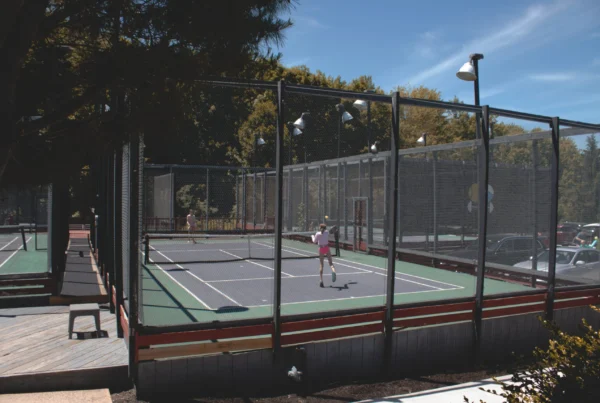
As the name suggests, platform tennis is played on a platform rather than directly on a conventional outdoor court surface. Courts are generally built on raised platforms, with space beneath the deck that can allow heaters to help keep the playing surface usable in difficult weather. That design does not make every court identical, and it should not be taken as a promise that every facility uses the same equipment. It does show how closely the sport’s court design is connected to its cold-weather identity.
The elevated court also gives platform tennis a distinctive feel. Instead of chasing a ball across a large open area, players stay within a more contained space. The court is enclosed by wire fencing, and a ball that bounces off the screens may remain in play. This creates rallies that reward awareness and quick reactions, while the smaller setting keeps players involved in the action.
More than a winter substitute
Platform tennis is often introduced as a way to keep playing racquet sports through the colder months, but the appeal is broader than seasonality. The sport can combine patience, strategy, finesse, speed, and quick thinking. It can be competitive, or it can be a social activity built around camaraderie and sportsmanship. That range makes it approachable for people who are curious about a new racquet sport, as well as players who already enjoy tennis, pickleball, or paddle.
For a local introduction to the broader racquet-sports community, explore Wembley racquet sports in Chagrin Falls. The key idea to remember is simple: platform tennis is a weather-friendly outdoor paddle sport with a raised court and surrounding screens. Created to keep racquet-sports play going when the temperature drops.
How Platform Tennis Differs from Tennis and Pickleball
Quick answer: Platform tennis is a compact, doubles-focused paddle sport played on a smaller court enclosed by screens. Tennis uses a larger open court and strung racquets, while pickleball uses its own paddle-and-ball setup and court format. The biggest platform-tennis twist is that the surrounding screens can keep a rally going after the ball rebounds from them.
That combination changes the feel of the game. Players have less court to cover than in tennis, but they must read angles, rebounds, and quick exchanges around the enclosure. If you already enjoy tennis or pickleball, the transferable skills are useful, but platform tennis still rewards its own timing and strategy.
| Feature | Platform tennis | Tennis | Pickleball |
|---|---|---|---|
| Court size and setting | A compact 44-by-20-foot court, approximately one-third the size of a regulation tennis court. | A substantially larger court designed for open-court movement and longer running patterns. | A separate court format with dimensions and markings distinct from platform tennis. |
| Paddle or racquet | A solid paddle, commonly 18 inches long, sometimes perforated with small holes. | A strung tennis racquet. | A pickleball paddle rather than a strung tennis racquet or platform-tennis paddle. |
| Ball | A small, spongy ball measuring about 2.5 inches in diameter. | A standard tennis ball. | A different ball designed for pickleball play. |
| Screen play | A surrounding wire screen, about 12 feet high, can be used to keep the ball in play after a rebound. | Play is generally bounded by court lines, without platform-tennis-style playable screens around the court. | Play follows pickleball’s own court boundaries rather than platform-tennis screen rebounds. |
| Typical format | Commonly played as doubles, with one standard description using the best of three sets. | Singles and doubles are both common formats. | Singles and doubles can both be played, depending on the setting. |
The court itself explains much of the difference. A platform-tennis court is smaller than a tennis court, and one municipal description places it at about one-third the size of a regulation tennis court. The tighter space can make points feel immediate: there is less time to react, and a well-placed shot can create a difficult angle quickly. See the Chagrin Falls tennis courts page for a closer look at how conventional tennis facilities differ.
The screens add a layer that neither a normal tennis rally nor a basic pickleball comparison fully captures. Platform tennis uses tightly strung fencing around the court, and the ball can remain playable after it hits the court and rebounds from the screens. Instead of treating every ball that reaches the edge as the end of a point, players learn to anticipate caroms and use them deliberately. That makes patience and court awareness as important as hitting hard.
Equipment also affects the contact and pace. Platform tennis uses a paddle instead of a strung tennis racquet, along with a smaller, spongy ball. The paddle may have holes for aerodynamics, but it is still a distinct piece of equipment from both a tennis racquet and a pickleball paddle. Players moving between sports should expect a short adjustment period as they learn the ball’s response and the compact court’s angles.
For a broader look at the options available locally, explore Wembley racquet sports. Tennis, pickleball, and platform tennis can appeal to overlapping players, but they are not interchangeable games. The best way to find your fit is to try the equipment, court spacing, and rally style that match how you like to play.
Why Ohio Players Enjoy Platform Tennis in Cold Weather
Short answer: Platform tennis is built for outdoor play when temperatures drop. Its raised court can accommodate heating beneath the deck, helping keep the playing surface usable in winter. While the compact court and surrounding screens create a focused game that works well for doubles and social play.
Ohio winters can make outdoor recreation feel like a seasonal compromise. Snow, freezing temperatures, and changing conditions often push racquet-sports players indoors. Platform tennis takes a different approach. It is traditionally a cool- or cold-weather outdoor sport, so winter is part of the experience rather than a reason to put the paddle away. The sport began as a way for neighbors to find a winter racquet activity close to home, and that purpose still explains its appeal today. The American Platform Tennis Association describes platform tennis as an outdoor racquet sport generally played in cool or cold weather.
A court designed for winter conditions
Platform-tennis courts are generally built on raised platforms. That construction leaves space beneath the deck, where some court designs use heaters to help keep the playing surface usable in difficult weather. This is a general feature of the sport, not a claim about a specific club’s court setup. So prospective players should confirm local facilities and seasonal policies before making plans.
The raised design also gives the court a distinct feel from a standard tennis court. The playing area is compact, and the surrounding screens keep the action contained. That can make a winter session feel active without requiring players to cover the large distances associated with full-court tennis. The game still rewards timing, patience, strategy, and quick thinking, so a short rally can involve plenty of decision-making.
Practical tips for your first cold-weather session
- Dress in flexible layers that you can adjust as you warm up. Avoid bulky clothing that restricts your swing.
- Wear footwear suited to the court and conditions, and check whether the facility has specific shoe guidance.
- Arrive early enough to get comfortable with the paddle, ball, screens, and footing before playing a full match.
- Start with controlled shots and placement rather than trying to hit hard immediately. Cold-weather play rewards patience.
Platform tennis can be competitive or simply social, which makes it a practical winter option for different kinds of players. Beginners can focus on learning the court and keeping rallies going, while experienced racquet-sports players can explore the strategy created by the screens and smaller playing area. The combination of outdoor energy, winter-friendly design, and camaraderie is a big part of why Ohio players keep coming back.
What Equipment Do You Need to Play Platform Tennis?
Short answer: beginners need a platform-tennis paddle, a small spongy ball, supportive court shoes, and warm layers suited to outdoor play. You do not need a full bag of specialized gear to try the sport. Start with equipment that helps you move comfortably, control the ball, and stay warm while you learn.
Start with the right paddle and ball
Platform tennis uses a solid paddle rather than a strung tennis racquet. The standard paddle length is 18 inches, and some paddles include small holes designed to improve aerodynamics. For a first session, focus less on advanced features and more on finding a paddle that feels comfortable in your hand and is easy to control.
The ball is different from a tennis ball or pickleball. Platform tennis uses a small, spongy ball measuring about 2.5 inches in diameter. Its feel and bounce are part of what makes the game approachable for new players. But they also take a little adjustment if your racquet-sport experience comes from tennis or pickleball.
Choose shoes for movement, not just warmth
Wear clean court shoes with a stable sole and dependable lateral support. Platform tennis involves quick side-to-side movement, short reactions, and frequent changes of direction. A shoe that keeps your foot secure can help you move with more confidence than a casual sneaker. Ask what footwear is permitted on the court before you arrive, especially if you are borrowing equipment or visiting a new facility.
Dress in layers for an outdoor court
Platform tennis is traditionally played in cold weather, so clothing matters. Use layers that let you warm up or cool down without restricting your swing. A moisture-managing base layer, a comfortable mid-layer, and a lightweight outer layer are practical starting points. Add warm socks, gloves that still allow a secure paddle grip, and a hat or ear covering when conditions call for them. Avoid bulky sleeves that catch on your movement or make it difficult to prepare the paddle.
What should you ask before your first session?
- Are paddles and balls provided, or should you bring your own?
- What type of court shoes are allowed?
- Should you arrive in warm-up clothing, or is there a place to change?
- Will someone explain the basic rules, serving, and screen play before you begin?
- Is the session designed for beginners, or should you have prior racquet experience?
Platform tennis is governed for players of all levels, so being new to the sport is not a reason to wait. Bring comfortable gear, ask a few practical questions, and give yourself permission to learn as you play.
How to Get Started with Platform Tennis at The Wembley Club
Short answer: Start by learning the basic idea of platform tennis. Then ask The Wembley Club about the best current way to try it at the Chagrin Falls, Ohio club. A tour can help you understand the racquet-sports environment, available amenities, and next steps without needing to arrive as an experienced player.
Platform tennis is easiest to approach when you treat your first visit as a chance to learn, not a test of athletic ability. The Wembley Club is a private fitness and racquet sports club built around tennis, pickleball, paddle, fitness, family programming, and community. That broader setting can make it easier to find an activity that fits your interests and experience level.
-
Learn what you are trying
Before you pick up a paddle, understand how platform tennis fits alongside other racquet sports. It has its own court, equipment, and style of play, so familiarity with tennis or pickleball can help, but it is not a requirement. Read the earlier explanations in this guide, then identify the questions you want answered in person. For example, you might ask how beginners are introduced to the sport. What equipment is appropriate for a first outing, and whether platform tennis complements your existing tennis or pickleball interests.
-
Explore Wembley’s racquet-sports community
Next, explore Wembley racquet sports to see how the club brings its court-sport offerings together. The Chagrin Falls location serves families, fitness enthusiasts, and players with different levels of experience. You can also review the club’s Chagrin Falls tennis courts to understand the surrounding racquet-sports context. The goal is not to assume every sport follows the same format, but to find a welcoming starting point and learn which options are currently a fit.
-
Ask for beginner guidance
When you contact the club, be specific about your experience. Tell the team whether you are completely new to racquet sports, have played tennis or pickleball, or are returning to activity after time away. Ask what introductory guidance, equipment recommendations, and current opportunities are available. This approach gives the club useful context while helping you avoid making assumptions about schedules, court access, or programming that can change.
-
Schedule a tour and choose your next step
Ready to see whether the environment feels right? Schedule a tour or contact The Wembley Club. A conversation and facility visit can help you picture how platform tennis might fit into your routine alongside the club’s other racquet sports, fitness, and family-focused offerings. Come with your questions, be honest about your goals, and let the team point you toward the most practical next step. At The Wembley Club, it’s more fun here when beginners feel comfortable asking where to start.
Frequently Asked Questions
What’s the difference between tennis and platform tennis?
Platform tennis uses a smaller court, a paddle, and a soft, spongy ball instead of a full-size tennis racquet and ball. The court is surrounded by screens, so a shot that rebounds from the fencing can remain in play. A platform-tennis court is about one-third the size of a regulation tennis court, according to the Scarsdale municipal description: Scarsdale’s platform tennis guide.
Is platform tennis similar to pickleball?
Both sports use paddles and a compact court, which makes them approachable for racquet-sports beginners. The games still feel different. Platform tennis is designed around play off the surrounding screens and is traditionally played outdoors in cool weather, while pickleball uses its own court layout, ball, and rules. Learning one can help you feel more comfortable with the other, but they are separate sports.
What’s the difference between paddle ball and platform tennis?
The names can be confusing because several racquet sports use the word paddle. Platform tennis specifically refers to the screened. Raised-court sport played with a short paddle and a spongy ball. “Paddle ball” may describe a different game depending on the region or facility. So ask about the court, ball, and rules before making plans.
Is platform tennis paddle tennis?
Not necessarily. Platform tennis, paddle tennis, padel, and other paddle sports have different courts, equipment, and rules, even when their names sound alike. If you are looking for the Ohio winter sport with a raised court and surrounding screens, ask specifically for platform tennis.
Ready to Explore Platform Tennis at The Wembley Club?
If you are curious about trying platform tennis in Chagrin Falls. A tour is a simple way to learn how the club’s racquet-sports community could fit your interests and your winter routine. Bring your questions about getting started, the court experience, and finding the right next step. Schedule a tour or open-house conversation with The Wembley Club today.