

A private fitness club vs public recreation center comparison comes down to how often your family will use the facilities, programs, and support—not simply the monthly fee. A public center may be the best fit for occasional activities or a tight budget; a private club may be worth more when several family members regularly use different amenities and organized programs.
There is no one right choice for every household. Public recreation centers differ by community, and private clubs differ in what membership includes. The practical question is whether the activities your family actually wants are available at useful times, within reach, and in a setting you enjoy returning to. This guide lays out a fair comparison, including where a private club can offer more and where a public center can be the sensible choice.
What Does a Private Fitness Club Offer That a Public Recreation Center May Not?
A public recreation center is typically designed to serve residents through community facilities and programs. A private fitness club is membership-based and may bring several activities and services together for its members. In practice, the facilities and schedules vary widely, so compare the specific locations rather than assuming every center or club offers the same package. A county facility-assessment document, for example, distinguishes public recreation space from private recreation facilities; that terminology does not by itself establish which option offers better value for a particular family. Read the facility assessment document.
For a family, the meaningful difference is often how many needs one place can meet. One parent might want a regular fitness class, another might play tennis or pickleball, and children may need a swim lesson or structured activity. If each person would use those options, the convenience of having them together can matter. If your household wants only one occasional activity, the larger bundle may be more than you need.
- Programming: Look at class variety, age ranges, session times, registration rules, and whether activities run in the season your family needs them.
- Facility access: Check which amenities are included, which require separate registration or payment, and whether reservations are needed.
- Convenience: Consider drive time, parking, schedules, childcare availability, and the number of separate accounts or memberships you would manage.
- Community: Ask whether you want a familiar place where your family can return regularly, or prefer to pay for activities as they come up.
At The Wembley Club in Chagrin Falls, Ohio, the private-club mix includes fitness, tennis, pickleball, paddle, swimming, and family and youth activities. Families can review the fitness classes and training, tennis programs, and pickleball offerings separately to see whether they match the activities they would use. The right comparison is not “more amenities are always better”; it is “would we use these amenities often enough to make them meaningful?”
A useful way to answer that is to map a normal week. Write down when each person is free, how far the family is willing to travel, and whether activities would happen before school, after work, or on weekends. Then compare actual schedules at each option. If a center offers a class your child likes but the time conflicts with school pickup, it may not become part of your routine. If several preferred activities can fit into one visit, a bundled setting may reduce planning and travel. The comparison should be grounded in usable hours, not the number of items on a facility list.
It also helps to distinguish access from participation. A membership may make a facility available, but a particular lesson, team, or event could still have separate enrollment or scheduling rules. Ask what a regular week looks like for a new family: how members find schedules, whether activities require reservations, how far ahead registration opens, and what happens when a class is full. These practical steps reveal whether the club or public center fits your family’s habits, rather than simply whether it has attractive amenities.
Cost Comparison: Is a Private Club More Expensive Over Time?
A private membership can have a higher recurring cost than choosing a low-cost public program, but comparing only the headline price can miss what your household pays across a season. Add up the activities each family member would actually attend, along with any separate registration, equipment, travel, or childcare expenses. Then compare that estimate with the membership terms and included benefits of a private club.
Because public recreation centers set their own fees and included access, there is no universal price comparison. Some offer resident rates or individual activity fees; others have memberships or seasonal registrations. Private-club terms also vary. At The Wembley Club, membership has no initiation fee or yearly commitment, is month-to-month with 30-day cancellation notice, and has no dining minimum. Membership pricing is discussed directly rather than published as a monthly rate. Families can review the membership information and ask about the terms for their household.
| What to compare | Public recreation center | Private fitness club |
|---|---|---|
| How you pay | May be free for some spaces, or charge per program, season, or membership; check local resident rules. | Usually a recurring membership payment; confirm what the specific membership includes. |
| Activities used | Costs can be spread across separate programs, registrations, and facilities. | Several activities may be available in one membership, but not every activity is necessarily included. |
| Family participation | Check household pricing, age limits, and whether each child or adult registers separately. | Ask which household members are covered and how member access works for children. |
| Commitment and cancellation | Rules depend on the municipality and program. | Review the contract, notice period, fees, and renewal details before joining. |
| Best value test | Often compelling when a family wants a few low-cost or occasional activities. | May make sense when several members consistently use multiple included amenities. |
To make the comparison concrete, list the activities your family expects to use in a typical month. Mark each one as “definitely,” “maybe,” or “unlikely.” Base your estimate on the definite activities first; do not count every possible class or program just because it is available. Then check whether the center or club has times that fit your calendar. A low price for a program your family cannot attend is not useful value, and an extensive club offering is not automatically a good purchase if only one person uses it.
- Write down real routines. Include current sports, fitness classes, swim activities, and the times you can realistically get there.
- Confirm what is included. Ask whether classes, court access, lessons, camps, or childcare carry separate charges or registration requirements.
- Estimate attendance conservatively. Use your likely schedule, not an ideal week with no conflicts.
- Compare the full terms. Check cancellation notice, registration windows, household access, and any extra costs before deciding.
For example, imagine one family member expects to take fitness classes twice a week, another wants regular court time, and a child is interested in a seasonal program. A fair comparison would include the separate costs, registrations, and trips for those activities at the public option, as well as any program charges beyond membership at the club. A second household may only want a few summer sessions and occasional open recreation; paying for broad, ongoing access may not be sensible for them. The point is not to force every expense into a precise formula, but to use the same assumptions for both choices.
Families can also make a simple break-even worksheet without guessing at a club’s rate. Put recurring dues and any extra charges on one side; on the other, list the public programs, access fees, and likely travel costs for the same time period. Add a column for how many household members would use each option. This makes a distinction that a monthly price alone cannot show: a fee shared by several active family members may feel different from paying for access that one person rarely uses. Request current terms directly, since eligibility and fees can change and differ between locations.
What Do Families Get Extra at a Private Club?
The potential advantage is not simply a longer list of facilities. It is the possibility of combining activities that otherwise require separate trips and arrangements. That can be valuable for parents coordinating different ages and interests. It is only an advantage, though, if the programs are suitable, available, and genuinely used by your family.
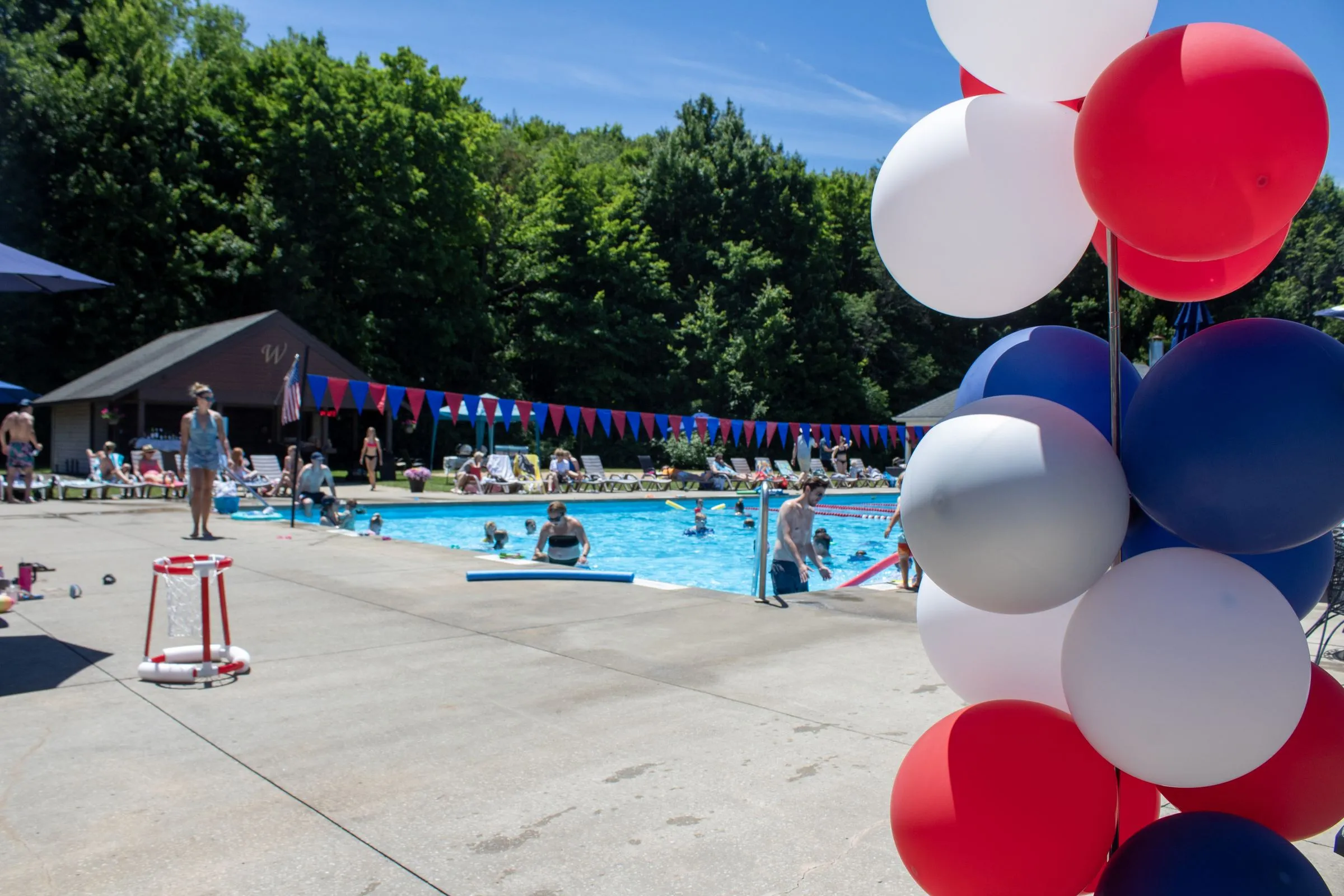
For example, The Wembley Club’s Chagrin Falls location brings together fitness and racquet sports, plus a convertible indoor/outdoor pool. The pool is a Chagrin Falls amenity; do not assume it is part of every Wembley location. Families can explore swimming at Chagrin Falls and the club’s family and childcare information to check what suits their needs.
Before counting an amenity as value, ask practical questions: Are the times convenient? Is the activity appropriate for each child’s age and experience? Does it require advance booking? Is childcare available when you would use it? Are there seasonal changes? Those details affect day-to-day usefulness more than a facility list alone.
One useful way to compare the settings is to imagine a normal weekday, not a special visit. If one parent can take a class while a child is in an available program, or family members can move between activities without driving to multiple locations, that convenience might be worth considering. But if your family is happiest outdoors at a neighborhood park, playing in a community league, or visiting a center only occasionally, a private club may add little to your routine.
Think through the practical details of one visit from arrival to departure. Can the family get there without an unusually complicated trip? Is there a place to wait between activities? Can siblings participate at the same time, or would one child need to sit out while another takes a lesson? How does the schedule work if a parent has a meeting or a child has homework? These questions are not small extras. They determine whether a club’s range of facilities makes family life easier or merely creates another commitment to manage.
Location matters within a multi-site organization, too. The Wembley Club’s Chagrin Falls and South Fayette facilities do not have identical amenities, court setups, or pricing. Chagrin Falls has a pool; South Fayette will not. If your household is considering South Fayette, Pennsylvania, confirm the latest facility and program details for that location rather than assuming the Chagrin Falls offering applies. The specific site is part of the value calculation because an amenity only helps if it is available where your family plans to go.
Which Is Better for Kids’ Programs: Public or Private?
Neither category wins automatically. Public centers may have accessible, seasonal classes and youth activities that work well for local families. A private club may offer a range of ongoing activities and a consistent place to participate. Program quality depends on the actual instructors, schedule, age groups, availability, and fit for your child—not simply whether the provider is public or private.
Compare the details rather than the labels:
- What ages can join, and are activities designed for beginners, experienced participants, or both?
- Are classes or teams offered at times your family can attend?
- How does registration work, and do programs fill quickly?
- Are supervision, drop-off, and pickup arrangements clear?
- Can siblings take part in different activities at the same location, or will the family need to travel?
- What is included in a membership or program fee, and what costs extra?
At Wembley’s Chagrin Falls club, family offerings include free childcare Monday through Saturday, academic tutoring, summer camp, and youth fitness, alongside racquet-sport and swim programming. Details and eligibility should be confirmed directly, especially when planning around particular ages or dates. The club’s academic tutoring information and youth programs can help you decide which options to ask about.
For a broader view of how family membership fits with children’s activities and community, see our guide to family-friendly experiences at The Wembley Club. The best decision is the one that fits your household’s actual routine, not an assumption that every child will join every program.
A child’s interest can also change after the first few sessions. When comparing choices, find out whether activities are organized in short sessions, seasonal blocks, or ongoing programs, and what flexibility is available if a child decides the activity is not a fit. Ask whether beginners can try an introductory class, what equipment is needed, and whether parents can observe. A clear answer helps set expectations and keeps the decision focused on what the child enjoys instead of what the adults hope the child will enjoy.
Parents should compare the entire family schedule, not just the child’s activity. A Saturday morning program may be ideal if a sibling has a simultaneous activity nearby, but less workable if it creates a long wait or two separate drives. A facility that offers activities for different ages can make coordination easier, provided the programs actually overlap at convenient times. Before joining or registering, write down each child’s start and end times and check how the adults’ plans fit around them.
How Does the Community Factor Into the Decision?
Community is personal, so it is difficult to reduce to a line in a budget. Some families value seeing familiar faces, returning to the same activities, and having a place where adults and children can build relationships over time. Others prefer the flexibility of trying different municipal programs or spending free time in public spaces without joining a club.
Ask each family member what would make them want to come back. A child may care most about a sport or camp; an adult may prioritize a convenient class or court time. Consider whether the club or center feels welcoming when you visit, and whether staff can clearly explain how activities work. A tour or introductory visit can help you assess the environment better than a brochure.
A club setting does not replace public parks, libraries, school activities, or community recreation. Many families use a mix. You might choose a membership for regular activities and still use public spaces for free play, walking, or occasional events. The goal is not to pick a side; it is to make sure your regular spending supports the experiences your family values.
To assess the social fit, notice what happens around the activity itself. Are families chatting before or after a class? Does your child seem comfortable asking a question or joining a group? Can you picture returning when the initial excitement of a tour has passed? A welcoming atmosphere is not something every household defines the same way, so let each family member describe what felt comfortable and what did not. The choice should support the way your household likes to spend time together, not just the amenities one person prefers.
It is also fine to begin with a modest plan. Your family may decide to use the public center for a seasonal class and visit a private club to understand its year-round options, or do the reverse. Keep track of which activities become regular and which fall away. After a few weeks, that record can give you a more realistic picture than predictions made before anyone has tried the routine. Recreation choices should fit the family you have now, while leaving room for interests to evolve.
How Can You Decide If a Private Club Membership Is Right for Your Family?
A private club is worth investigating when multiple members will use its facilities or programs regularly, and when the convenience and setting matter to your household. A public recreation center may be the better fit when you need only one or two occasional activities, want to pay as you go, or find programs that already match your schedule and budget.
Use this short checklist before making a decision:
- Start with your priorities. Choose the two or three activities your family will use most, rather than trying to use everything.
- Check the location. Confirm the specific amenities at the location you would visit. The Wembley Club’s Chagrin Falls and South Fayette facilities do not have identical offerings.
- Ask about real availability. Get current schedules, age requirements, access rules, and any reservation details.
- Compare total household cost. Include program fees and likely extra expenses, and read membership terms carefully.
- Visit before deciding. Notice whether the trip, facilities, and atmosphere work for your family.
At The Wembley Club, families can ask about a complimentary fitness class pass and arrange a facility tour before deciding whether membership fits. You can also look at the club’s current facility and program information and use the contact page to ask location-specific questions. For the larger family-value discussion, the club’s membership overview is a useful starting point; be sure to confirm current program details directly.
Before you decide, give every household member a simple role in the comparison. Ask the adults to name their realistic weekly availability and ask children which activities they would choose first. Separate those “must have” items from the “nice to try” list, then check which option accommodates the priorities without relying on a packed ideal schedule. If the answer is unclear, ask the facility what a typical first month looks like and what a new member or participant needs to do to get started. A concrete first-month picture often makes the trade-offs easier to see.
Finally, compare the commitment in both directions. A public program may require enrolling before a session begins, while a membership may offer ongoing access under specific cancellation terms. Neither arrangement is automatically more flexible for every family. Consider the start date, registration deadlines, schedule changes, and how much notice you need to change plans. At Wembley, month-to-month membership has 30-day cancellation notice and no yearly commitment; ask about all current terms before joining. For a family whose calendar changes often, understanding these details is part of measuring value.
Schedule a tour of The Wembley Club
Frequently Asked Questions
Is a private fitness club always more expensive than a public recreation center?
No. Costs depend on local public-program fees, private membership terms, household use, and any separate activity charges. Compare the total cost for the activities your family will actually attend rather than assuming one type is always cheaper.
Can families use both a public recreation center and a private club?
Yes. Some households use a private club for recurring activities and public facilities for parks, occasional programs, or other recreation. Consider what each option adds and avoid paying for overlapping access your family will not use.
What should I ask before joining a private club?
Ask which household members are covered, what amenities and programs are included, whether activities require separate registration, how reservations work, and what the cancellation terms are. Confirm the details for the specific location you plan to use.
Does The Wembley Club have the same facilities at both locations?
No. Amenities vary by location. The Chagrin Falls, Ohio club has a pool; families should check the South Fayette, Pennsylvania facility’s current program and amenity information rather than assuming it is identical.
The right choice is the one your family can use consistently and enjoy without stretching the budget for activities that go unused. Compare the real schedules, terms, and travel involved, then choose the setting that makes it easier to keep recreation part of family life.