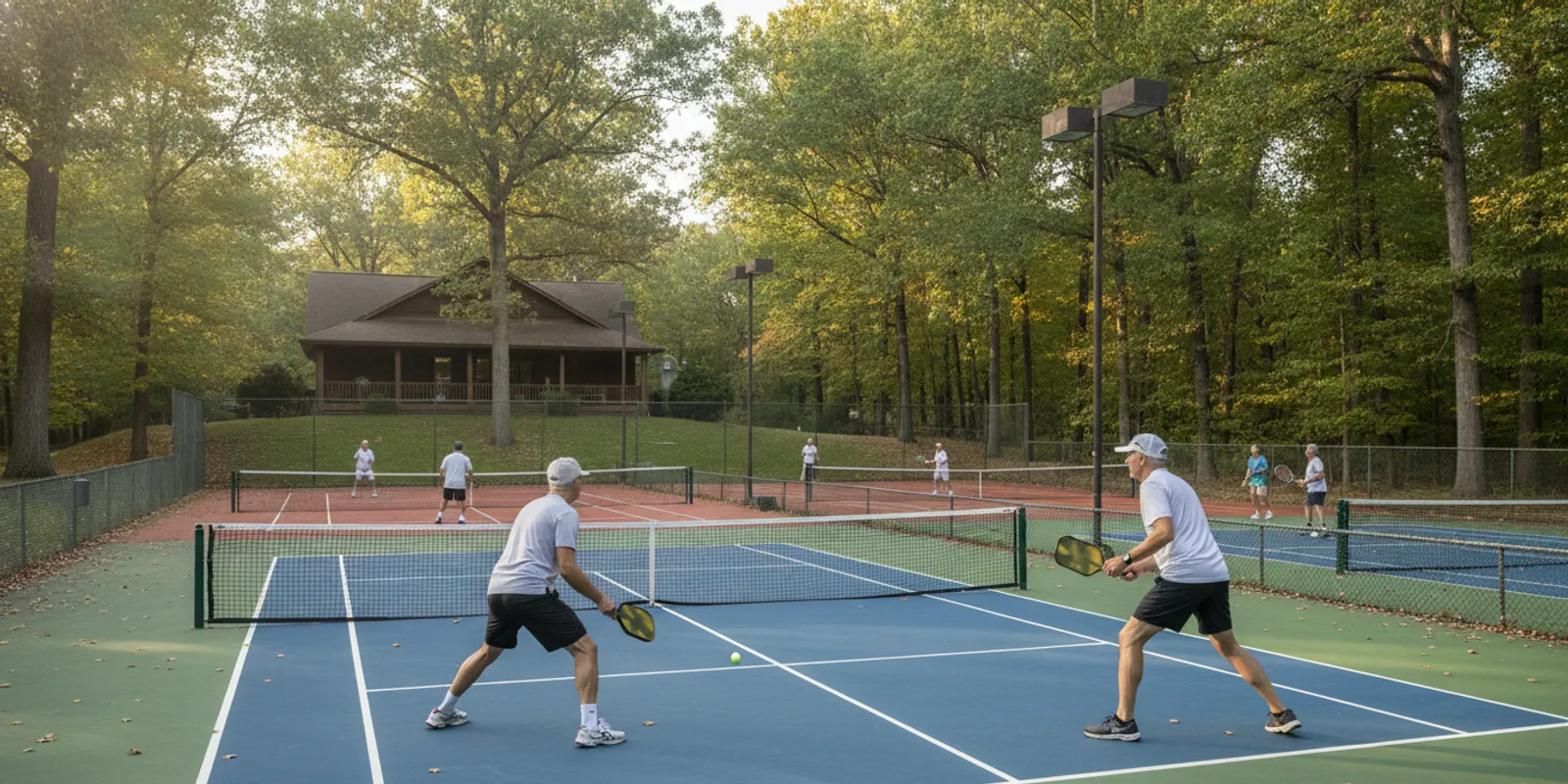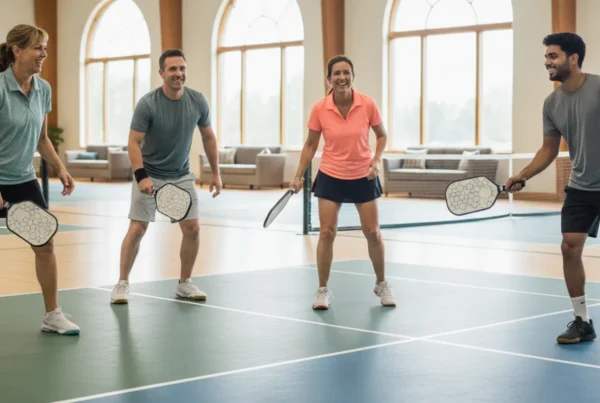

Racquet sports cross-training means combining sports such as tennis, pickleball, and platform tennis to practice overlapping skills while challenging your body and decisions in different ways. Each sport asks you to move, react, and control a racquet, but court size, ball behavior, equipment, and playing conditions change how those skills are used. With a thoughtful schedule, variety can make practice more engaging and help you become a more adaptable player.
Why Can Racquet Sports Cross-Training Help You Improve?
Playing more than one racquet sport gives you a broader set of movement and decision-making problems to solve. You still read an opponent, prepare your racquet, move into position, and choose a shot. But the time available, the ball’s response, and the space you need to cover can change from one court to another. Practicing those differences may help you become less dependent on one familiar rhythm.
That does not mean simply adding games guarantees better results or prevents injury. Repeating the same demanding movements without enough recovery can still overload a player, and new sports bring their own learning curve. The useful idea is to vary the activity with a plan, maintain technique, and adjust the amount of play to your experience and how your body feels. TrueSport discusses cross-training as one approach that can help support athlete health and reduce burnout; it should be considered one part of balanced training, not a promise of injury prevention: TrueSport’s overview of cross-training.
- Shared foundations: ready position, balance, tracking the ball, court awareness, and recovery after a shot.
- Different constraints: court dimensions, ball bounce, racquet or paddle, net play, and outdoor conditions.
- A practical benefit: variety can keep practice fresh and expose a player to situations that one sport alone may not provide.
- A necessary limit: more court time is not automatically better; intensity, rest, and skill level matter.
The Wembley Club’s racquet sports overview is a useful starting point for comparing the available options. For an overview of how tennis, pickleball, and platform tennis fit together at the club, see Tennis, Pickleball, and Platform Tennis at The Wembley Club.
How Do Tennis Skills Transfer to Pickleball and Platform Tennis?
Tennis gives players practice with court coverage, timing, directional control, and rally construction. Those ideas carry into other racquet sports, but the transfer is not one-for-one. A tennis player may recognize a passing-shot opportunity in pickleball, for example, but a smaller court and different equipment call for a different swing size and target. A familiar intention can be useful; copying the full tennis stroke without adjusting it can be counterproductive.
Footwork and recovery
In each sport, a player must move to a workable position and recover for the next ball. Tennis often involves covering more ground and managing longer baseline exchanges. Pickleball typically compresses many exchanges into a tighter area, where short adjustment steps and a stable stance matter. Platform tennis is played outdoors on a smaller court with a screen, so players must also read rebounds and position themselves for a ball that may come back into play from the enclosure.
These contrasts can help players notice their movement habits. A tennis player who takes oversized steps may find that smaller adjustments are more effective near the pickleball kitchen line. A pickleball player can use tennis practice to work on covering a wider court and recovering after a deep shot. Platform tennis adds another kind of spatial problem: anticipating both the opponent’s shot and a possible screen rebound. Wembley’s paddle tennis information describes its platform tennis offering.
Reading the ball and choosing a shot
Tracking an incoming ball is common to all three sports, but the bounce and flight are not identical. Tennis rallies may give a player time to shape a groundstroke from farther back. Pickleball’s lighter plastic ball and close-range exchanges place a premium on controlled contact and quick decisions. Platform tennis uses a solid paddle and a spongy ball, with outdoor weather and the screen influencing how a rally develops.
Instead of trying to force one sport’s technique into another, look for the transferable decision: Where is the open space? Is the opponent balanced? Should you keep the ball in play or take a risk? Then adapt the preparation and contact to the sport. The club’s tennis courts and programming and pickleball information can help you explore those two different playing environments.
What Can Pickleball and Platform Tennis Add to a Tennis Player’s Game?
Pickleball and platform tennis can encourage a tennis player to refine touch, compact preparation, and close-range reactions. These are not substitutes for tennis practice. They are different settings in which to work on control and awareness.
- Compact strokes: Shorter swings can be useful when the ball arrives quickly or there is little room to prepare.
- Soft hands: Delicate placement and controlled pace are important in short-court exchanges.
- Quick resets: Players learn to recover their balance and respond again after a fast exchange.
- Awareness at the net: Reading an opponent’s body position and the available angles can sharpen decision-making.
- Adaptability: Changing sports requires players to pay attention to the rules, equipment, and court rather than relying only on habit.
Those experiences may inform a tennis game, but transfer takes reflection and deliberate practice. After a pickleball session, a tennis player might identify one thing to carry back to tennis, such as a calmer response to a fast ball, and one thing to leave behind, such as a pickleball-sized swing. A session with a teaching professional can also help translate a useful idea into the right technique. The Wembley Club has racquet sport professionals who can help players explore instruction options.
Platform tennis contributes a different set of challenges, especially outdoor play, the screen, and the need to anticipate rebounds. A player who learns to stay engaged after the first bounce may become more patient about constructing a point. But the rebound changes the geometry of a rally; it is a platform-tennis skill to learn on its own, not a tennis shortcut. If you are learning the sport, give yourself time to understand the court and rules before expecting skills to transfer.
How Do the Three Sports Compare for Cross-Training?
The table below compares broad demands, not fixed rules for every player or every point. Conditions, ability, doubles or singles play, and the style of an opponent all affect how a match feels.
| Sport | Cross-training takeaways |
|---|---|
| Tennis | Demands: More court to cover, baseline and net play, varied groundstrokes and serves; Adds: Rally construction, directional control, and movement over a larger playing area; Remember: Manage court coverage and avoid carrying a large swing into tighter exchanges in another sport |
| Pickleball | Demands: Compact court, quick exchanges, short-court touch and positioning; Adds: Soft shots, compact preparation, and fast decisions close to the net; Remember: Allow time to learn the kitchen rules, paddle contact, and ball response |
| Platform tennis | Demands: Outdoor court, paddle and spongy ball, play involving screen rebounds; Adds: Anticipation, patience, and adapting to rebounds and outdoor conditions; Remember: Learn how the screen changes the rally instead of treating it like a standard tennis court |
Use the comparison to decide what you want from a session. If you need tennis-specific consistency, spend time on tennis rather than assuming other sports will replace that practice. If you want to explore touch or reaction speed, try a short pickleball session and pay attention to control. If you want a new tactical puzzle, learn platform tennis with someone who can explain the screen and court positioning. A balanced mix is built around your goals, not a rule that you must play each sport equally.
How Can You Build a Weekly Cross-Training Schedule?
A good schedule starts with your current activity level, priorities, and available recovery time. A player who is new to racquet sports should not copy the weekly volume of an experienced competitor. Begin with a manageable amount, note how you feel during and after play, and add activity gradually if you are recovering well.
Example plan for a recreational player
This sample assumes the player already tolerates two court sessions a week. It is a framework, not a prescription. Adjust the days, duration, and intensity to fit your schedule and experience.
| Day | Plan |
|---|---|
| Monday | Activity: Rest or easy walking; Purpose: Start the week without another demanding court session |
| Tuesday | Activity: Tennis practice or match play; Purpose: Focus on tennis-specific movement, strokes, and point patterns |
| Wednesday | Activity: Rest, mobility, or light strength work; Purpose: Support general conditioning without turning every day into a hard workout |
| Thursday | Activity: Pickleball, at a comfortable intensity; Purpose: Practice compact control and learn the sport’s positioning |
| Friday | Activity: Rest; Purpose: Make room for recovery before the next session |
| Saturday | Activity: Platform tennis or an easy tennis session; Purpose: Explore a different court challenge; choose one, not necessarily both |
| Sunday | Activity: Rest and reflect; Purpose: Check energy, soreness, and enjoyment before planning the next week |
To make the plan your own, decide which sport is the priority. Give that sport your freshest practice time and schedule other sports around it. Keep at least one easier or rest day after a demanding match if you need it. If you add a third sport, consider replacing a session before adding another one. A simple training note can help: record what you played, how hard it felt, whether anything hurt, and one skill you want to practice next time.
Warm up before playing with light movement and sport-specific actions that build gradually. Start a new sport at an easy pace; learning unfamiliar footwork while playing intensely can make it harder to pay attention to technique. If pain is sharp, worsening, changes how you move, or persists, stop and seek advice from an appropriate health professional. This article is general information, not medical advice. Players with an injury, health condition, or questions about safe activity should consult a qualified clinician.
How Can You Keep Cross-Training Balanced and Safe?
Variety can distribute practice across different activities, but it does not erase the physical load of playing. Several matches in a row may still tax the same joints and muscles, especially if the sessions involve frequent starts, stops, lunges, and overhead shots. A new sport can also create soreness because the timing and movement are unfamiliar.
- Increase gradually: Add one new session or a small amount of time at once, rather than abruptly increasing total play.
- Vary intensity: Not every session needs to be a competitive match. Use some time for technique, controlled rallies, or learning rules.
- Protect recovery: Plan rest and sleep as part of training, and do not treat persistent pain as a normal sign of progress.
- Use suitable equipment: Learn which racquet or paddle and footwear are appropriate for the sport and court surface.
- Separate skill from fitness goals: If your goal is to improve a particular tennis stroke, schedule focused tennis practice in addition to other sports.
Cross-training should make your routine more sustainable and interesting, not become a reason to play through pain or ignore fatigue. Sports medicine advice should be individualized, particularly after an injury or when returning to activity. For general strength and conditioning alongside court play, you can explore The Wembley Club’s fitness classes and training options, then choose activity that suits your needs.
How Can a Multi-Sport Club Support Cross-Training?
Playing several sports is easier to explore when there is a practical way to compare them. The Wembley Club in Chagrin Falls offers tennis, pickleball, and paddle tennis, along with fitness facilities and programming. Having those racquet options at one club can make it simpler to try a different sport or plan a varied week; actual access, court availability, and program details depend on current club arrangements, so ask before planning your schedule.
Start by choosing a purpose for your visit. You might want to compare court settings, ask how beginners get started, or see what instruction and play opportunities are available. The club’s tennis stance guide can help you think about movement fundamentals, while the membership information is a place to review the membership options rather than assume which activities are included. If you are planning for a family, check current details directly with the club.
Use a visit to ask concrete questions: Which sport is best for a beginner to try first? What should you bring? Are introductory sessions or instruction available? How do court reservations and play opportunities work? Which membership or pass options provide access to the activities you want? A clear answer to those questions will help you decide whether a multi-sport routine fits your interests and schedule.
For more about the location and its racquet options, visit The Wembley Club in Chagrin Falls. The club also offers a swimming facility, but swimming is a separate type of activity and should be included according to your goals and comfort level, not assumed to replace racquet practice.
Frequently Asked Questions About Racquet Sports Cross-Training
Does playing pickleball make you better at tennis?
It may give you practice with touch, compact preparation, quick reactions, and close-range decisions. Those ideas can be useful in tennis, but tennis-specific strokes, court coverage, and tactics still need tennis practice. Carry over the decision-making principle and adapt the technique to the sport.
Can I play tennis, pickleball, and platform tennis in the same week?
Some recreational players may be able to include all three, but there is no universal weekly schedule. Consider your current activity, match intensity, recovery, experience, and any health concerns. Start with a manageable amount, keep rest in the plan, and reduce activity if pain or unusual fatigue develops.
Does cross-training prevent racquet-sport injuries?
No training approach can guarantee that you will avoid injury. Varying activities may reduce repetitive exposure to one pattern for some players, but total workload, technique, conditioning, equipment, and recovery also matter. Increase activity gradually and consult a qualified health professional about injury or persistent pain.
Which sport should a beginner try first?
Choose based on what sounds enjoyable and accessible, then learn the rules and basic technique with guidance. Tennis, pickleball, and platform tennis each have their own equipment, court demands, and learning curve. A visit or introductory session can help you compare them without assuming that one is best for everyone.
Contact The Wembley Club to ask about an open house or visit
Ready to Explore More Than One Racquet Sport?
Racquet sports cross-training works best when variety has a purpose: keep practicing the skills central to your main sport, use other sports to explore different movement and tactical challenges, and allow time to recover. Compare tennis, pickleball, and platform tennis at The Wembley Club, then ask about current ways to visit and try the activities that interest you.