
Choosing swim lessons for kids in Chagrin Falls can feel like a big decision, especially when every child approaches the water differently. The right starting point is not a race to reach a particular stroke or age milestone; it is a thoughtful match between your child’s comfort, the lesson format, and the skills the class is designed to teach.
Ask about children’s swim lessons
What age should children start swim lessons?
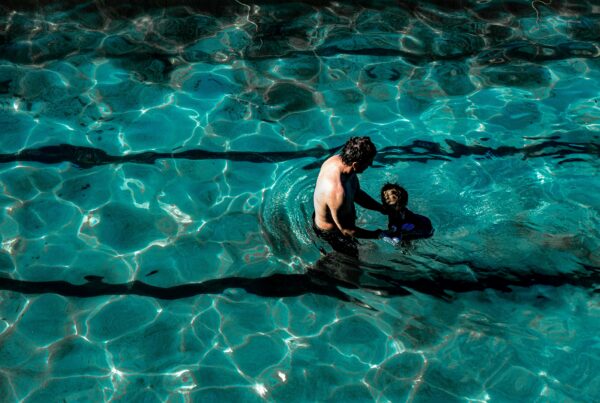
There is no single age that makes every child ready for the same kind of lesson. Children develop at different rates, and their comfort around water can vary even within the same family. Some programs offer parent-and-child water experiences for infants and toddlers. For example, the Greater Cleveland YMCA describes early-childhood swim lessons for ages 6 months to 3 years as parent-assisted lessons intended to help little ones build confidence. That is an example of one program’s approach, not a universal starting-age rule.
For a preschooler or school-age child, readiness is better understood as a conversation than a pass-or-fail test. Consider how your child responds to water play, whether they can take part in a group activity, and what support they may need to feel settled. A child who is cautious can still be ready to learn; the class and instructor should account for that starting point. A child who is enthusiastic may still need steady, step-by-step instruction.
Before registering, tell the program about your child’s previous water experience and any concerns you have. Ask how placement works, what the instructor expects at the first lesson, and whether a parent can remain nearby. If your child has had a difficult experience around water, share that context rather than hoping it will go unnoticed. The goal is to begin with a plan that respects the child and sets realistic expectations.
It may help to separate a child’s willingness to participate from the skills they have already learned. A child might be excited to enter the pool but unfamiliar with following poolside directions. Another child might understand the routine but want time to watch before joining in. These are useful details for the instructor, not reasons to compare siblings or classmates. Explain what you have observed in plain terms, such as “She likes splashing but has not taken lessons,” or “He is comfortable in the water and has practiced kicking with an adult.” Specific examples give the program a clearer picture than a broad label like beginner or advanced.
How can you tell whether your child is ready?
Readiness does not mean a child can already swim. It means the family and program can identify a reasonable first step and help the child participate safely. Use these questions to prepare for a placement conversation:
- What does your child already know? Describe whether they have taken lessons, played in a pool, or had little experience in water. Be specific about what they have tried rather than labeling them a strong or weak swimmer.
- How do they respond to instruction? Can they listen to a short direction and try it with support? If transitions or unfamiliar settings are challenging, mention that in advance.
- What makes them feel comfortable? Think about whether they prefer to watch first, stay close to a familiar adult, or join an activity after seeing it modeled.
- What is your family’s goal? You may want a positive introduction to the pool, steady skill development, or a next step after previous lessons. A clear goal helps you ask whether a class is a good fit.
Do not pressure a child to perform a skill to prove readiness. Share observations with the instructor and ask how the program supports children who need time to adjust. If the first placement is not a match, ask what alternatives are available and when it may make sense to try again.
A useful pre-enrollment conversation can be short and concrete. You might say, “My child has played in shallow water with family but has not taken formal lessons. They are cautious in new groups. How do you recommend we start, and what will you need to know before placement?” If your child has taken lessons elsewhere, describe the level or activities they completed, when they last practiced, and which skills still feel uncertain. Ask whether the staff prefers to assess the swimmer or use a family’s description as the first guide. The point is to share enough context for an informed recommendation without expecting a parent to assign a formal level.
Group swim lessons vs. private lessons: which is better for kids?
Neither format is automatically best for every child. A group class offers a shared learning environment, while a private lesson can give an instructor more opportunity to focus on one swimmer. Availability, goals, the child’s comfort, and the program’s structure all matter. Ask the provider to explain its current options; do not assume that every club offers the same formats or class sizes.
| What to compare | Group lesson | Private lesson |
|---|---|---|
| Learning environment | Children learn alongside other swimmers and take turns practicing. | Instruction is centered on one swimmer and their current goals. |
| Peer interaction | May suit a child who enjoys learning with others and can wait for a turn. | May suit a child who prefers individual attention or needs a quieter format. |
| Instructor attention | Shared among the enrolled swimmers; ask the program about its class size and supervision. | Focused on one swimmer during the scheduled lesson; ask how instruction is structured. |
| Questions to ask | How many swimmers are in this class? How are swimmers placed? What happens if a child needs extra support? | What goals can the instructor work on? How is progress reviewed? Is this format available for my child? |
| Best next step | Discuss your child’s comfort level, experience, and ability to participate in a group. | Explain the reason you are considering one-to-one instruction and ask whether it fits the child’s needs. |
For some children, classmates make lessons more engaging. Others may be more comfortable beginning with individual attention. A family can also revisit the choice as the child’s confidence and skills change. The useful question is not simply “Which is better?” but “Which available format is a sensible next step for my child right now?”
When you ask about lesson size, ask what that number means in practice. Find out how many children are assigned to each instructor, how the instructor supervises the group, and how children wait between turns. These details are more helpful than assuming a ratio from another pool’s program. A center’s staffing and class arrangements can vary by age, skill level, and session.
It can help to think through the trade-offs before you call. In a group, a child may benefit from seeing peers try an activity, but may also need to wait while another swimmer takes a turn. One-to-one instruction may allow the instructor to focus on an individual goal, although a child who enjoys a group setting might prefer the social energy of classmates. Neither observation predicts success on its own. Ask how the available lesson is organized, then consider your child’s temperament, schedule, and the instructor’s placement recommendation together.
What should a good children’s swim lesson program include?
A well-organized program should make it clear how a child is placed, what each class works on, and how families can ask questions. Before signing up, look for straightforward answers to practical questions:
- Placement: How does the program learn about prior experience and determine a starting level?
- Progression: What does the current level description say, and how does the program decide when a swimmer is ready to move on?
- Supervision: Who is responsible for watching swimmers during instruction and transitions? What is the instructor-to-swimmer arrangement for your child’s class?
- Safety routines: What pool rules apply? How are entry, exit, waiting, and transitions managed? What should a parent do if a child needs help?
- Communication: How will families learn what was practiced and what to work on next?
- Family logistics: What should children bring, where should they meet the instructor, and when should they arrive?
Safety is part of the whole visit, not just the time spent doing a drill. Follow the pool’s posted rules and staff directions. Stay attentive to your child before and after instruction, and do not treat a lesson as a substitute for active adult supervision around water. Ask the club to explain its specific policies rather than relying on assumptions about another facility.
It can also help to look for a welcoming atmosphere where children can learn at an individual pace. Encouragement matters, but so do clear directions and consistent expectations. A child should know where to wait, when it is their turn, and how to ask for help. These everyday details can make the lesson feel more manageable for a new swimmer.
For a more useful comparison between programs, write down the same questions for each one and note the answers in matching categories. For example, record how placement is determined, how a parent receives updates, what the child needs to bring, and which formats are currently offered. This keeps the decision focused on what your family needs rather than on a vague impression or a promise of fast progress. If an answer is unclear, ask for an example of what happens during a typical arrival, lesson transition, or end-of-class update.
What do Wembley’s swim lesson levels cover?
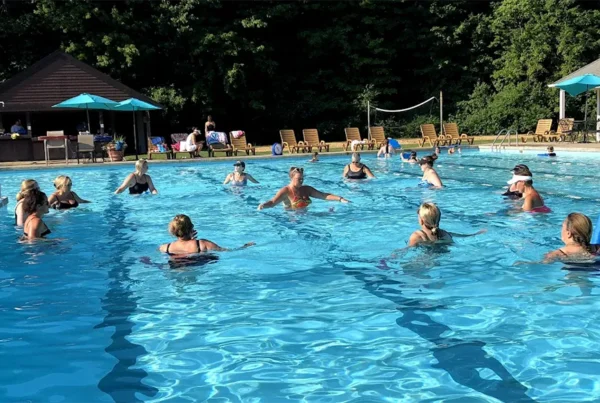
The Wembley Club’s Chagrin Falls location has a convertible indoor/outdoor pool and offers swim lessons in Levels I through IV. The available level descriptions provided by the club are specific for the first two levels:
- Level 1: For beginners who need to get comfortable in the water and work on basic skills.
- Level 2: For swimmers who are comfortable in the water and know basic kicking, including on their backs.
Those descriptions offer a useful starting point, but a parent’s own assessment is not a substitute for placement guidance. If your child seems between these descriptions, explain what they can do and ask the swim program how it determines the right level. The club also lists Levels III and IV, but ask for the current descriptions and placement guidance instead of guessing what those levels include.
When discussing a possible level, describe actual experience instead of trying to translate your child’s skills into a level number. For example, tell the instructor whether your child is comfortable entering the pool, whether they have practiced kicking, and whether they have had instruction before. The level label is only useful if the program’s current criteria fit the swimmer. If the instructor recommends a different starting point than you expected, ask what the class focuses on and how the program will communicate progress. That conversation can help set expectations without assuming that every swimmer follows the same timeline.
Lesson offerings and program details can change, so confirm the current schedule, format, and enrollment process directly. Visit the Wembley swim lessons page for program information, and explore the Chagrin Falls pool and swimming information for more about the facility. The pool is at the Chagrin Falls club; do not assume that a different club location has the same amenities.
What can you expect at your child’s first swim lesson?
For many families, the first lesson is partly about learning the routine. Before you go, check the registration details for arrival time, where to meet, and what your child should bring. Give yourself enough time to find the pool area without rushing. If the child is nervous, a calm explanation of what will happen can be more useful than promising that everything will feel easy.
Tell your child that the instructor will provide directions and that it is okay to ask for help. Avoid setting a performance goal such as swimming a certain distance on day one. A more practical first-lesson goal is to meet the instructor, learn the pool routine, and understand what the class will practice. Your child may spend time watching, listening, and getting used to the setting as well as trying skills.
After the lesson, ask open questions. “What did you practice?” or “What felt comfortable?” invites a more useful conversation than “Were you the best swimmer?” If the child is not ready to discuss it, give them time. Share relevant observations with the instructor, and ask what the family can do before the next lesson. Avoid practicing unfamiliar skills without instructor guidance.
Keep the routine predictable when possible: prepare the needed items, arrive with time to spare, and follow the pool’s rules every visit. Consistency can help children know what to expect. If a child is upset or reluctant, communicate with the instructor rather than forcing participation or quietly withdrawing without asking about options.
A simple preparation checklist can reduce avoidable stress. Confirm the meeting point and arrival time; pack the items the program asks for; and make sure your child knows who will meet them and what to do if they feel unsure. On arrival, let the staff guide you through the pool’s routine rather than allowing a child to enter or move around the pool area independently. After class, give the child a moment to change and settle before asking how it went. If something did not work, share a calm, specific observation with the instructor so the next visit can be planned with that context.
How can swim lessons fit into a family routine?
Lessons are easier to sustain when the schedule works for the whole household. Consider school, other activities, travel time, and the child’s energy at the time of day offered. A schedule that looks convenient on paper may not feel manageable if it creates a rushed transition. Ask about current lesson availability and the process for selecting a class before making plans around a particular time.
Swimming can also be one part of a broader family routine. The Wembley Club offers family programming and other activities at its Chagrin Falls location; availability and membership details should be confirmed directly. Families exploring what a club environment can include may find the membership information helpful. You can also learn about family amenities, youth programming, and academic support as you consider how club activities fit your family’s needs.
Families comparing the value of a broader club experience can also read about family-friendly options at The Wembley Club. Swim lessons are a specific program; membership is a separate decision. Ask about the current details for each rather than assuming a lesson enrollment includes membership or that membership includes a particular lesson schedule.
It may be helpful to think about the full visit, not only the time in the water. Consider whether the lesson time works with school pickup, meals, rest, and other activities. If a child arrives hurried or overtired, the transition may be harder than it needs to be. A realistic plan might include leaving extra time to park and find the pool, keeping the post-lesson schedule light, and preparing the swim bag the night before. If several family members will attend, decide in advance who is responsible for staying with the child before and after instruction and who will communicate questions to staff. Practical planning makes it easier to keep expectations calm and consistent.
How do you enroll in swim lessons for kids in Chagrin Falls?
Start by describing your child’s age, water experience, comfort level, and any questions about the class format. Ask which current level may be appropriate, how placement is determined, what lesson options are available, and how the program handles class size and supervision. Confirm schedules, registration steps, and what to bring with the club before you make a plan.
If you are also curious about the facility, ask about arranging a visit. A tour can help parents understand the pool setting and how a club’s family activities fit together. The Wembley Club serves families at its Chagrin Falls, Ohio location, and its Chagrin Falls club page provides location information. For a broader look at the club, you can also visit the Wembley Club home page.
Before you contact the club, it can be useful to have a short list ready: your child’s age, prior lessons or water experience, the days or times that may work, and any concerns about group participation or comfort. Then ask for the current enrollment steps and the best way to receive placement guidance. Keep your decision open until you understand what is available for the child’s age and level. If you are considering membership as well as lessons, ask how each works on its own so you can compare the options without assuming one is bundled with the other.
Schedule a tour or ask about swim lesson enrollment
Frequently asked questions about kids’ swim lessons
Does my child need to know how to swim before starting lessons?
No. Wembley’s Level 1 is described as being for beginners who need to get comfortable in the water and work on basic skills. Share your child’s current experience with the program so staff can help identify an appropriate starting point.
How do I know whether group or private lessons are available?
Ask the club about the current formats, schedules, and placement process. Do not assume that a particular format is available for every age or level, or that class sizes match those of another provider.
What does Level 2 mean at Wembley?
The club describes Level 2 as being for swimmers who are comfortable in the water and know basic kicking, including on their backs. Ask the program if you are unsure whether your child meets that description.
Are swim lessons a substitute for adult supervision?
No. Parents and caregivers should remain attentive around water and follow pool rules and staff directions. A lesson is instruction; it does not replace active supervision outside the lesson.
Every child’s first step can look different, and a supportive conversation with the swim program can help you choose a thoughtful place to begin. With clear expectations and a welcoming routine, lessons can become one enjoyable part of family life in Chagrin Falls.