TRX Classes: What Beginners Can Expect at Wembley
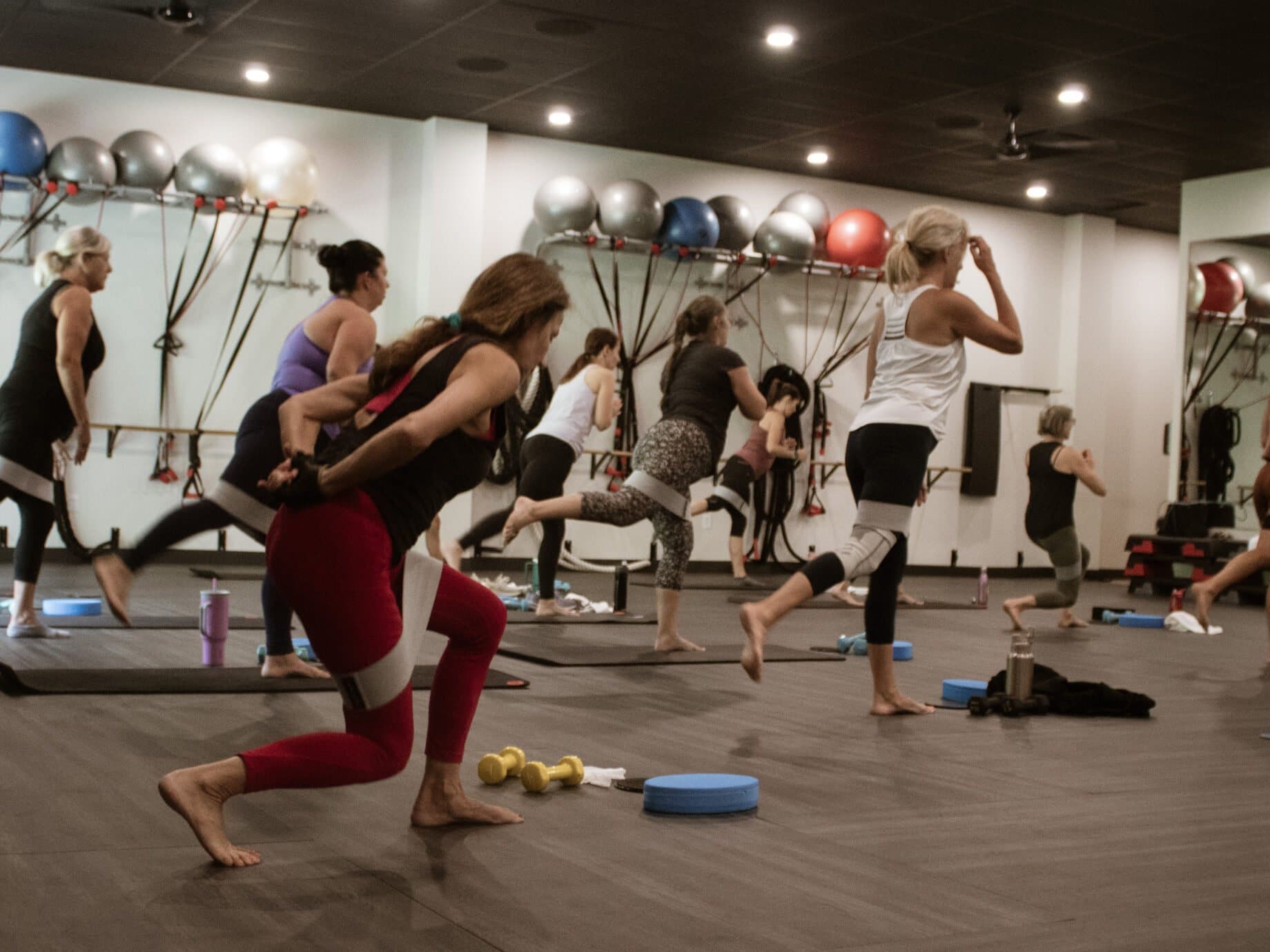
If you are curious about TRX classes, you may be wondering what the straps do, how challenging a session feels, and whether you need experience before you try one. TRX uses suspended straps and body weight to create exercises that can be changed by adjusting your position and movement. At The Wembley Club in Chagrin Falls, Ohio, group fitness is part of a broader private fitness and racquet sports community. It’s More Fun Here!
Schedule a tour and ask about class options
What are TRX classes?
TRX is a form of suspension training. The straps provide handles or foot cradles while part of your body remains in contact with the floor. Your body position and weight create resistance; the equipment does not move like a fixed-weight machine. A class may combine movements for strength, balance, coordination, and core control. Exact exercises, pace, and session structure vary by instructor and program, so check the current schedule rather than assuming a particular format is offered.
One feature that makes suspension training distinctive is that small changes in your stance can change the effort. In a standing row, for instance, leaning farther back generally makes the pull more demanding. Standing closer to upright can reduce the challenge. For a supported squat, holding the straps may give you a point of contact as you sit back and stand. These examples illustrate how the equipment works; they are not a promise that a specific class will include those movements.
Straps are not a shortcut or a guarantee that every movement will feel easy. You still need to control your body, follow instructions, and choose a version that suits your current ability. Some exercises ask for more balance and coordination than their simple appearance suggests. Ask the instructor to demonstrate and offer a modification if you are unsure.
TRX is one option within the wider world of group fitness. Some people enjoy the guided pace and variety of a class. Others prefer equipment-based strength work, cycling, yoga, Pilates, or a mix across the week. You can explore the club’s Wembley fitness classes and facilities to understand the broader group fitness setting in Chagrin Falls.
What might happen during a first TRX class?
Class formats differ, but a first session may begin with an instructor explaining how to hold, adjust, and position the straps. You may then follow demonstrations through a set of movements, with time to change your stance or ask for help. A session might include a warm-up, strength or conditioning exercises, and a cool-down. Ask what the day’s class will cover instead of expecting every session to follow the same plan.
You do not have to arrive knowing the exercise names. The useful first-day goals are simpler: learn where to stand, understand the basic setup, listen for cues, and notice which adjustments make a movement manageable. If the instructor demonstrates a sequence, focus on one instruction at a time. For example, first find a stable foot position, then check your grip, and only then begin the movement.
Let the instructor know before class that you are new to suspension training. Share relevant limitations, such as a movement you have been advised to avoid, and ask what alternatives are available. If you have a health concern or injury, follow guidance from an appropriate healthcare professional about exercise choices. You can also review the club’s staff information and contact the club with questions about how to find the right class contact.
How do the straps change an exercise?
The straps can offer support, create a pulling challenge, or add a balance demand, depending on the movement. In a row, your hands hold the straps while you draw your body toward the anchor point. In a squat, the handles can provide light support while you bend and straighten your knees and hips. In some plank variations, the feet go into the cradles, which changes the balance challenge. These are common examples of suspension exercises, not a list of promised class activities.
Several adjustments can change what you feel: moving your feet, changing your body angle, shortening the range of motion, or choosing a simpler variation. If a row feels too difficult, for example, you might stand more upright and ask the instructor to check your position. If a balance-focused version feels unfamiliar, you can ask whether there is a stable alternative. Avoid making a movement harder just because another participant is using a more advanced version.
Who might enjoy TRX training?
TRX may appeal to people who like guided strength work and want to explore more than one movement pattern in a session. The straps can be used for standing and floor-based movements, and many exercises ask you to stabilize your body as you work. People who enjoy variety may like seeing how an adjustment in stance or angle changes an exercise.
A group setting can be another draw. An instructor provides demonstrations and direction, while the class creates a shared time to focus on movement. If you prefer to understand the session before joining, ask whether the class is suitable for first-time participants, how the instructor handles modifications, and whether you should arrive early for an introduction.
TRX is not automatically the right format for everyone. The straps can challenge balance, grip, and coordination, and a particular exercise may not suit your needs. A useful class experience includes room to ask questions and choose an appropriate variation. If you would rather begin with a different pace or type of movement, compare the fitness options at Wembley and ask what is currently available.
How can you prepare for a first class?
- Check the current schedule and description. Confirm that the session is being offered, where it meets, and whether you need to reserve a place. Class availability and details can change. The fitness page is a starting point, and the club can confirm current information.
- Arrive with a little time to spare. You will have a chance to introduce yourself, ask how the straps are adjusted, and mention any relevant limitations before the session begins. If arriving early is not practical, contact the club in advance with your questions.
- Choose comfortable, secure clothing. Wear clothes that let you reach, bend, and move freely without getting in the way. Athletic shoes are commonly suitable for strength classes, but check the club’s specific guidance for the session you plan to attend.
- Bring water and follow facility guidance. Ask whether a towel or any other item is recommended and where belongings should be stored. Do not assume equipment or supplies are provided unless the club confirms it.
- Start with a manageable version. If a movement feels too hard, ask how to make it easier by changing your angle, stance, or range. Aim for controlled movement rather than speed or a large range of motion.
- Speak up if something feels wrong. Stop and tell the instructor if you experience sharp, unusual, or concerning discomfort. Do not try to push through a sensation that makes you unsure.
- Give yourself time to learn. It is normal to spend attention on the straps and instructions during an early session. You do not need to remember every movement afterward; ask for clarification when you need it.
There is no need to turn the first class into a test. Learning the setup, becoming familiar with the movements, and deciding whether you enjoy the format are worthwhile outcomes. You can reflect afterward: Did the instruction feel clear? Could you find manageable versions? Did the session’s pace suit you? Those answers will help you decide what to try next.
How can you scale a movement during class?
Scaling means changing an exercise so you can work with control at a suitable level. With suspension straps, a small change in distance from the anchor or in body angle can make a noticeable difference. The instructor can help you choose an option; do not guess at a complicated setup if you have not been shown how to do it.
Consider a standing row as a simple example. If leaning back makes it hard to keep a steady position, stand more upright and reduce the effort. As you become familiar with the movement, you can ask whether a slightly different angle is appropriate. The point is not to progress every time. A stable, controlled repetition is more useful than a rushed one that loses its form.
For a movement that uses the feet in the cradles, ask the instructor to explain how to enter and leave the position safely before starting. If you feel uncertain, ask for a floor-based or otherwise more stable alternative, if one is available. In a class, other people may be working at different levels. Their choices do not determine what is appropriate for you.
Pay attention to how a change feels, not just how it looks. Can you follow the instructor’s cues? Can you maintain a comfortable, controlled range? Can you breathe without straining to keep up? If not, pause and ask for another option. A class should not require you to copy an advanced variation to participate meaningfully.
How does TRX compare with other group fitness formats?
The right class depends on what you want from a workout and how you like to move. This general comparison can help you prepare questions, but it is not a description of a specific Wembley schedule. Confirm current offerings and class details with the club.
| Format | Typical emphasis | What to consider as a newcomer |
|---|---|---|
| TRX suspension training | Body-weight resistance, stability, and controlled movement using straps | Ask how to adjust the straps and change stance or angle |
| Strength or equipment-based class | Resistance work using equipment or body weight | Ask how equipment is selected and which movement variations are available |
| Indoor cycling | Cardiovascular work on a stationary bike, with pace and effort varying by class | Ask about bike setup and how to manage your effort |
| Yoga or Pilates | Movement, posture, balance, flexibility, or controlled strength, depending on the session | Check the class description and mention relevant movement limitations |
| Personal training | Individual instruction shaped around personal goals | Ask what an initial appointment includes and what guidance is available |
You do not have to choose one format for every workout. Some people like to alternate between resistance work and other activities they enjoy. A week might include a group class, a walk, and a mobility-focused session, depending on personal circumstances and schedule. How often to exercise is individual; experience, recovery, health, and time all matter. If you are returning after a long break or managing a health concern, seek advice appropriate to your situation before changing your activity.
One way to decide is to identify what you want from your next session. If you want to learn how your body responds to adjustable resistance, a TRX class may be worth asking about. If you prefer a fixed setup or a different style of movement, another class may feel like a better first step. The club’s group fitness information can help you compare the general options available in Chagrin Falls.
What should you ask before signing up?
Get the practical details before you attend so you know what to expect. Ask whether the class is on the current schedule, how to reserve a spot, where it meets, and what equipment is provided. If you are new, ask whether you should arrive early and whether the instructor can introduce the strap setup before class.
It can also help to ask how a class is paced and whether there are options for different experience levels. Avoid assuming that a class described as group fitness will be beginner-focused or that every movement will have the same alternative. Clear answers can help you decide whether to try the session or explore another format.
If you have an injury, health concern, or specific movement limitation, ask what information the instructor needs from you and consider getting appropriate professional guidance beforehand. The instructor can explain class movements and modifications, but a general class description cannot determine what is suitable for an individual’s health needs.
The Centers for Disease Control and Prevention provides general public-health information about physical activity. For broader background beyond class-specific questions, consult the CDC’s public-health resources; for your own situation, ask a qualified healthcare professional when needed.
It is also useful to think about what you want from the session. Are you looking for guided strength work, a new movement challenge, a social way to stay active, or an introduction to a different class style? That answer can help you decide whether TRX is worth trying or whether another activity is a better fit. Wembley’s racquet sports programs may also interest you if you are exploring activities beyond fitness classes.
How can you explore group fitness at The Wembley Club?
The Wembley Club is a private fitness and racquet sports club in Chagrin Falls, Ohio. Its group fitness offering sits alongside tennis, pickleball, paddle, swimming, and family programming. The Chagrin Falls location has a pool; do not assume that amenities are the same at the club’s South Fayette, Pennsylvania location. For this article, check with the Chagrin Falls club about current class availability rather than assuming a TRX class is on the schedule.
Start with current fitness information and ask which sessions are available now. If you are considering membership, review the membership details and speak with the club about the options that fit your household and interests. Pricing is shared in direct conversations, so contact the club for current, location-specific information.
You can also explore other activities at Chagrin Falls, including tennis, pickleball, and swimming. That broader mix can be helpful if you want a club experience that includes fitness and racquet sports rather than a single type of workout.
If you would like to get a feel for the facility before deciding, contact the club to arrange a visit. A tour gives you a chance to see the setting, ask about current class formats, and learn how group fitness fits alongside other activities. Use the contact page to ask about a tour and available options.
Book a tour and ask about trying a fitness class
Frequently asked questions
Do I need experience before trying TRX?
You do not need to know the exercises to ask about a first class, but confirm that the session welcomes newcomers. Tell the instructor you are new and ask for help with setup and modifications.
Is TRX the same as lifting weights?
Both can provide resistance exercise, but they use different methods. TRX uses suspended straps and body position to create the challenge, while weight training uses external loads such as dumbbells or machines. The better fit depends on your preferences, goals, and the options available to you.
Can I adjust the difficulty?
Many suspension exercises can be changed by adjusting stance, body angle, or range of motion. Ask the instructor to show an appropriate version rather than changing a setup you have not learned.
What should I wear?
Wear comfortable clothes that let you move freely and stay secure during standing and floor movements. Check with the club about any specific footwear or equipment guidance for the class you plan to attend.
Does The Wembley Club currently offer TRX classes?
Class schedules can change, and this guide does not confirm that a TRX session is currently offered. Contact The Wembley Club in Chagrin Falls or check its current fitness information to verify availability and ask about comparable class options.
A first TRX class can be a chance to explore a different way to move, learn the basics at your own pace, and decide whether guided suspension training feels right for you. Ask questions, choose manageable variations, and find a fitness routine that makes you want to come back.